From the Edges — Being Mean to Books in Order to Find out the Meaning of Books – By Kayla Lythgoe
In our ‘From The Edges’ series we feature Aotearoa NZ Academic Design Projects. Our practice as designers can be seen to be explored, pushed and perhaps become something entirely new where it exists at the edges of our practice in the world of academia. Free from the constraints of commercial outcomes and clients, designers explore and challenge existing paradigms.
In this article, we talk with Kayla Lythgoe about Being Mean to Books in Order to Find out the Meaning of Books, a Master of Design project from Toi Rauwhārangi, College of Creative Arts, Massey University, where burning, soaking, and even eating spaghetti from books became a way to explore what these familiar objects really mean to us.
What’s your background?
Doing my Master’s was a series of stars aligning. I didn’t have intentions of doing a postgraduate degree, certainly not right after my undergraduate, if ever. I moved to Pōneke in 2021 to study a Bachelor of Design majoring in Visual Communication Design at Toi Rauwhārangi, College of Creative Arts, Massey University.
I always knew that I was going to do something creative but in retrospect, I can’t pin down what made me choose specifically visual communication design. Sometimes I think I just got lucky choosing the right discipline from the beginning. It’s been a privilege to have the opportunity to continue on with my studies for another year with a Masters at Massey. From day zero, I’ve learnt that a lot of the best things happen serendipitously.
Who is your favourite designer/creative/artist and why?
My master’s work is not something I considered your typical graphic design. I found my work sitting in a conceptual, cross-disciplinary space between art and design. I was of course inspired by designers but I equally began to look to other creatives to help me understand what I was doing.
Richard Long and his work A Line Made by Walking was a pivotal moment for me. I’d come across it in Funny Weather by Olivia Laing. Like my interventions with books, the work didn’t necessarily exist. Yes, we see a photograph but this is simply documentation of the act. I looked to Long’s work, understanding that my work didn’t have to be a ‘thing’ but the action of my interventions with books.
A designer who I’ve increasingly been inspired by over my Master’s is Ziga Testen. To say the least, he creates beautiful objects. Another mention is Canadian artist Micah Lexier. His use of blunt and obvious language was an inspiration for my Book in a Box.
What goals and aspirations do you have for the future?
Within the near future, my goal is to be a sponge. Being in an academic setting is one way to learn and I’m hungry to continue to grow, and develop my skills as a designer. Finishing my studies has been bittersweet and my time at Toi Rauwhārangi has not only shaped me into the designer that I’ve become but into the person that I am.
My masters was about me getting to know and to further understand books as objects. I think it’s expected that I aim to work with books during my lifetime. Currently I’ve got a number of publications in the works—many collaborations with people I’ve met at Toi Rauwhārangi. I’m looking forward to continuing to take my learnings from my Masters into my practice and career.
When did you first learn about your area of specialty? What about it piqued your interest?
My one qualm with choosing to study Visual Communication Design has always been the fact that I live on my computer. I need to physically make with my hands. So in the third year of my undergraduate degree, I took a class called Editorial Design—learning to design books. My world flipped. I’d taken typography classes since the beginning of my degree, and fell in love with the art, but designing books, always thinking about how the final object would sit in my hands, I knew I’d found my place. From then, my work has centered around my interest with materially and one’s physical interactions with books.
What’s the background of your current project?
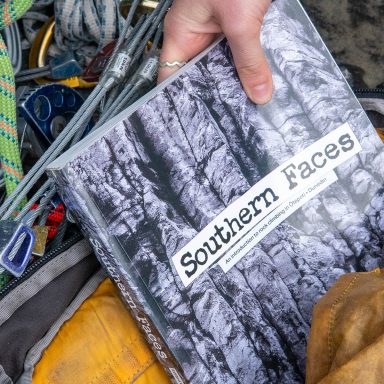
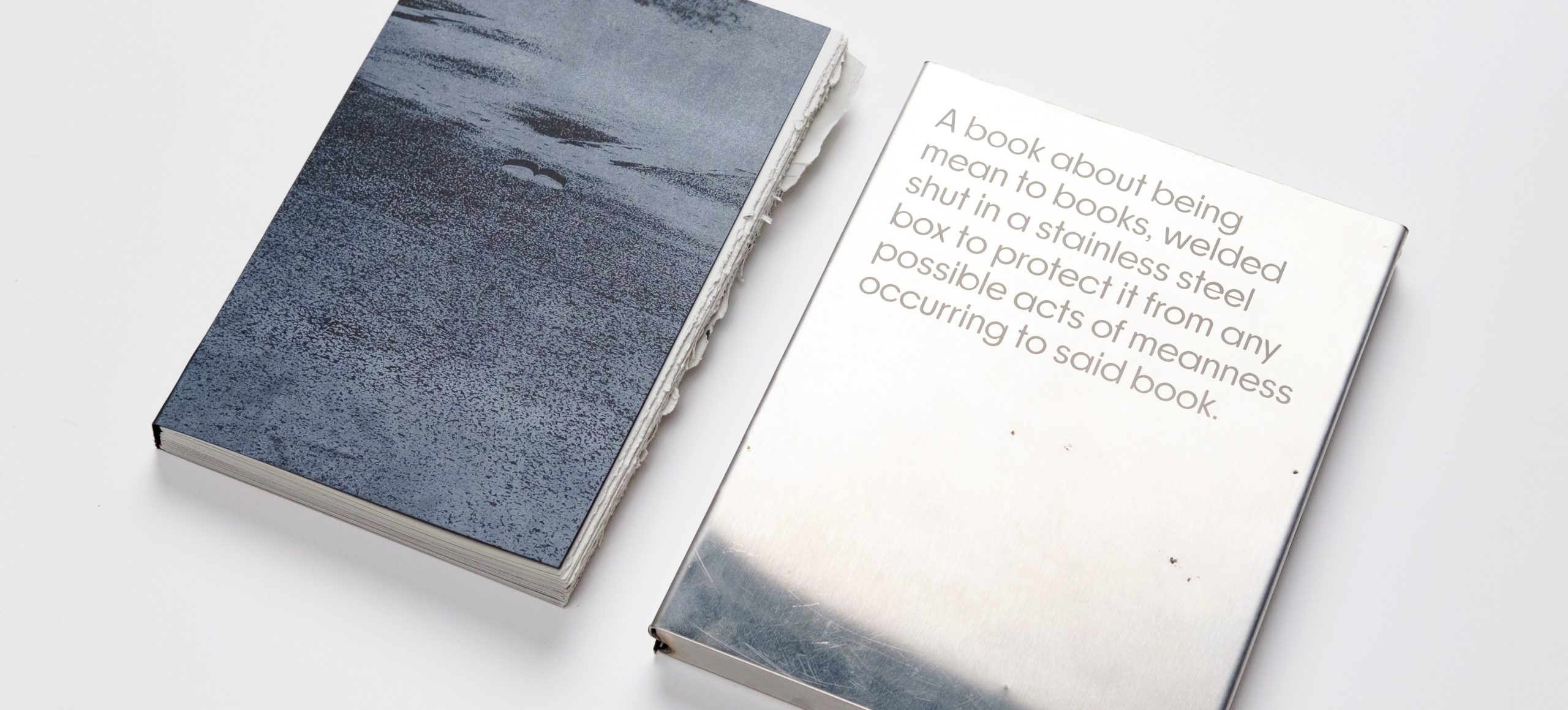
Being Mean to Books in Order to Find Out the Meaning of Books aims to understand the object that is the book. The ideas, ideals and expectations that are attached to the object and what they have come to represent socially and culturally.
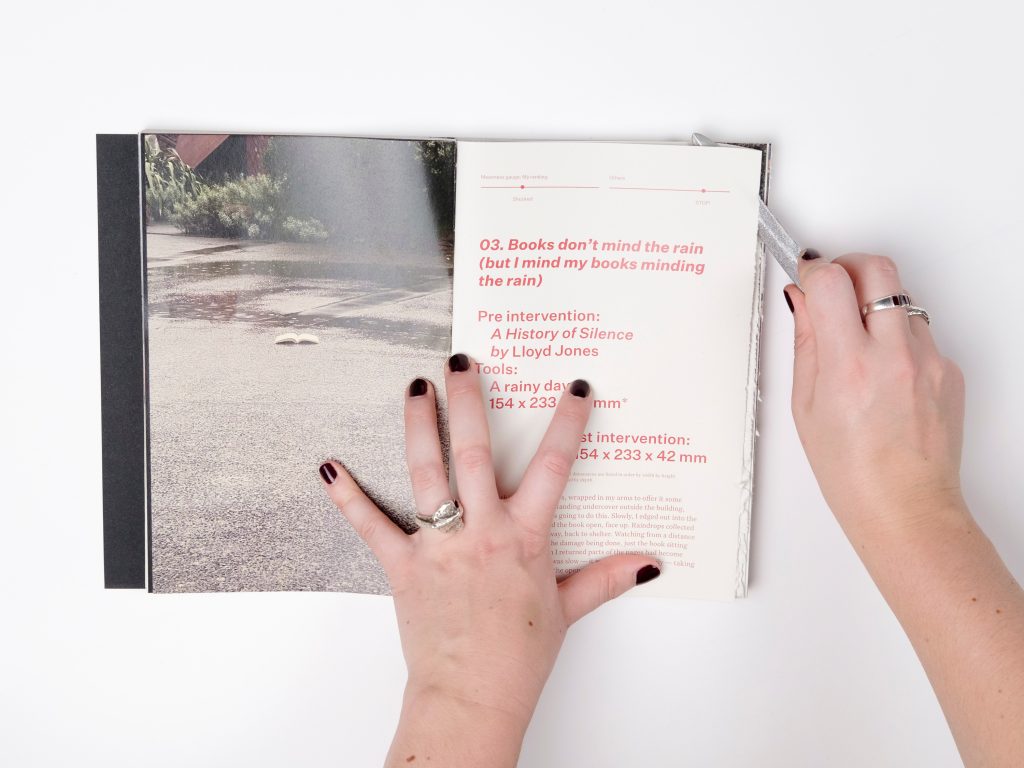
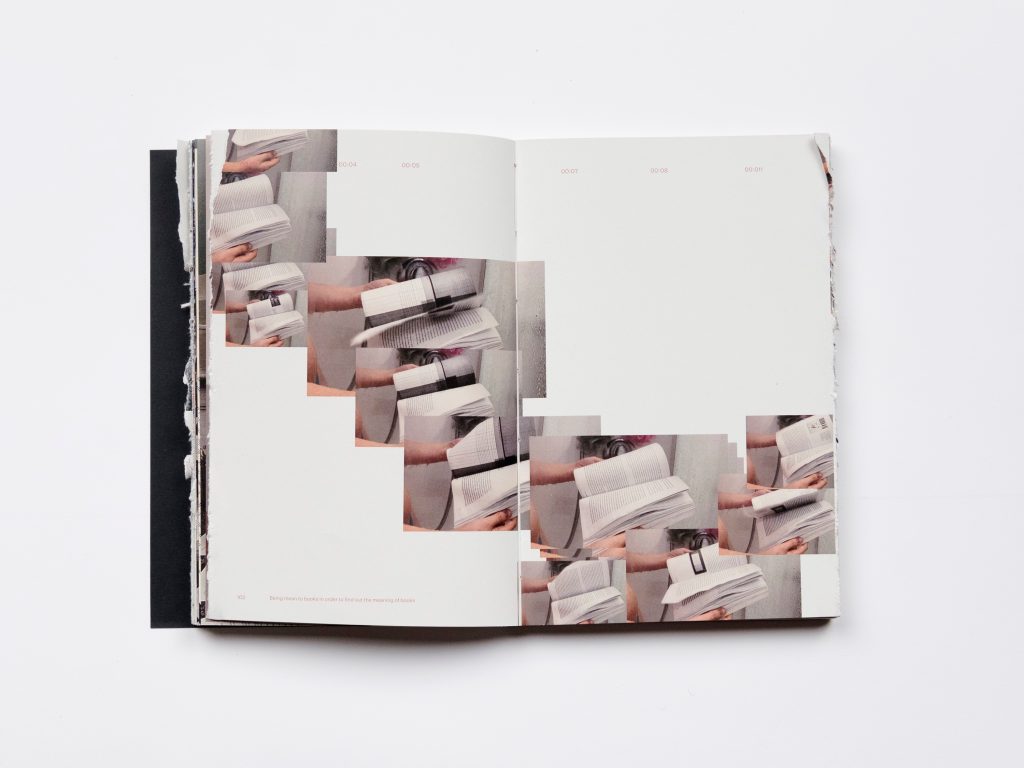
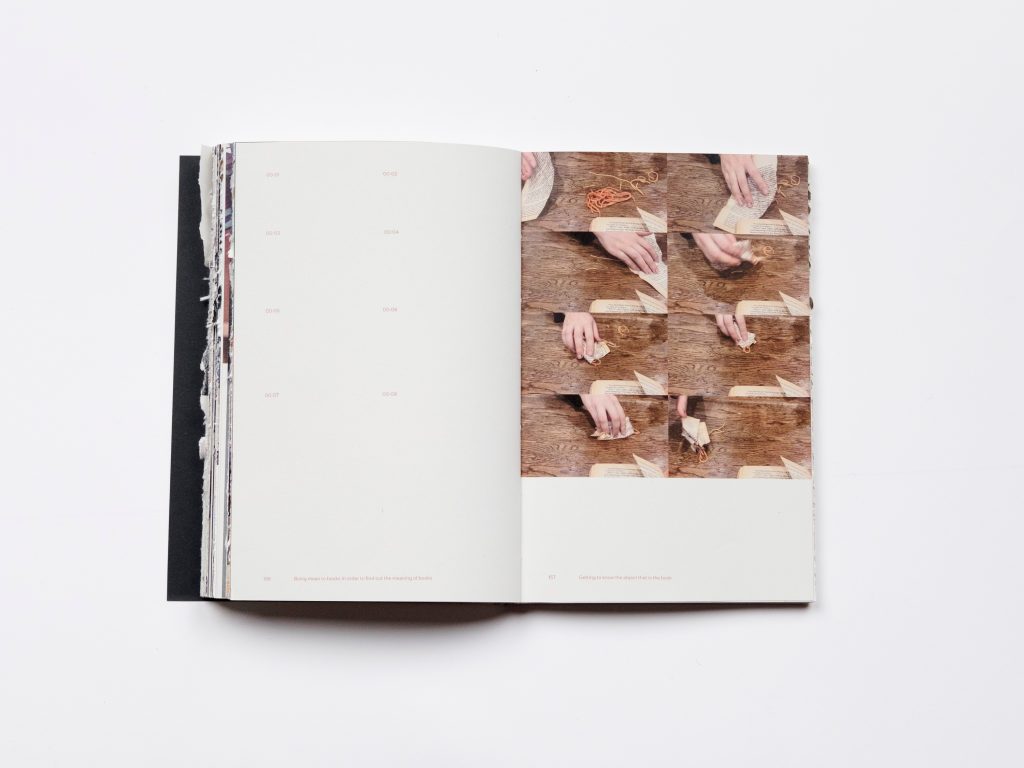
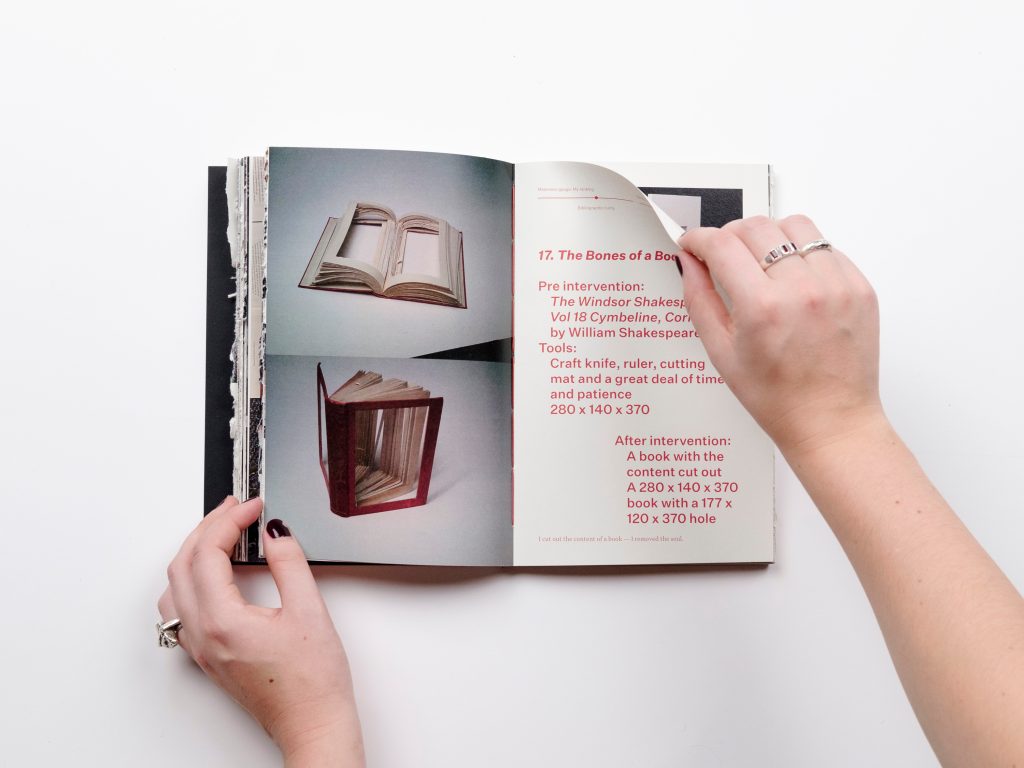
Through a series of interventions with existing books, I broke the unspoken rules that surround them. I burnt them, read them in the shower, and used one as a plate to eat spaghetti off, pushing books and myself to our limits.
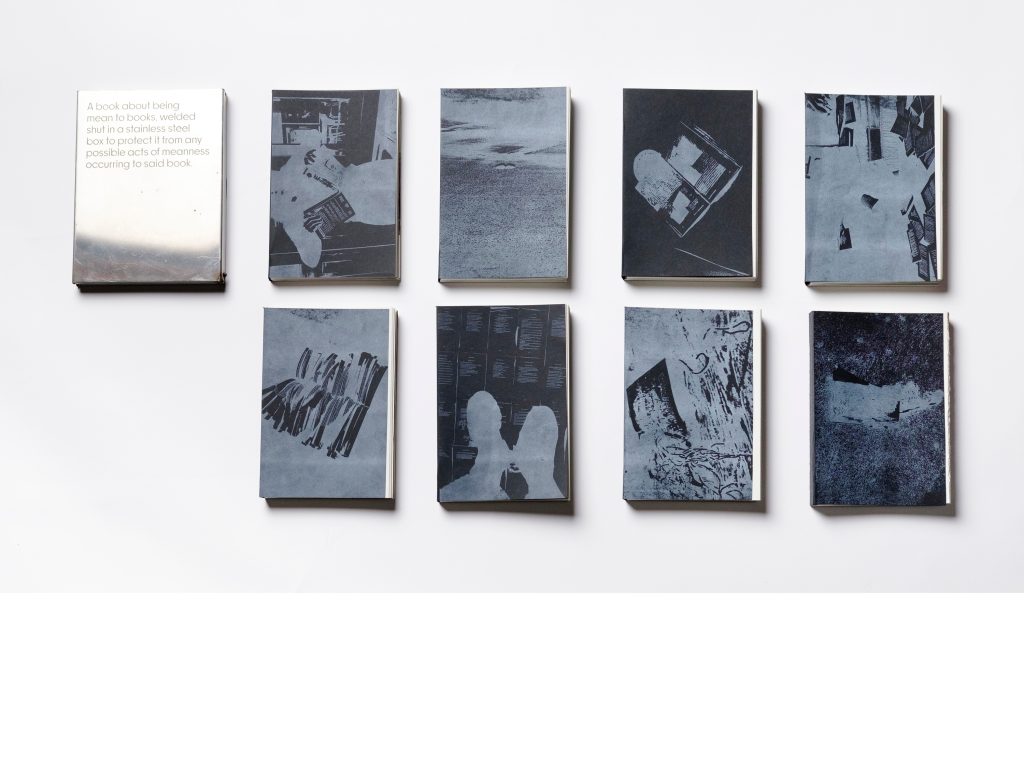
I like my books to stay perfect, and this was a tension which drove this work and never faded—although I came to realise the importance of a reader’s interaction with a book. The work culminated with two books sitting in contrast to each other, a representation of myself at each end of the scale. The first book made up of French folds, inviting the reader to rip open the pages in order to fully access the content
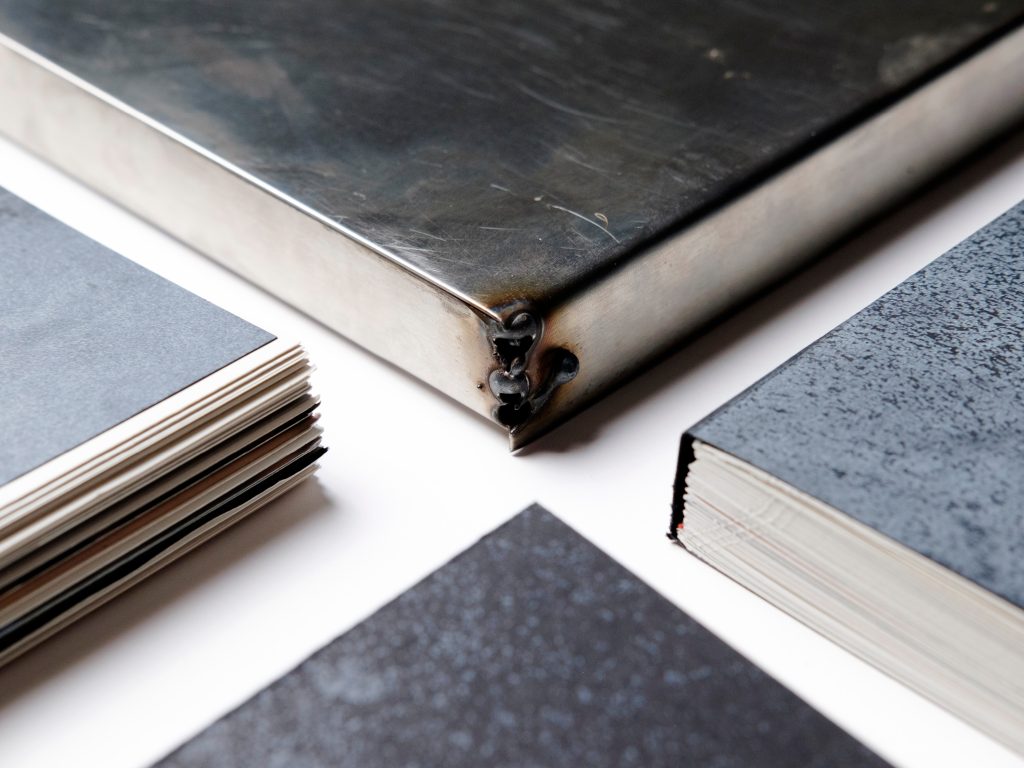
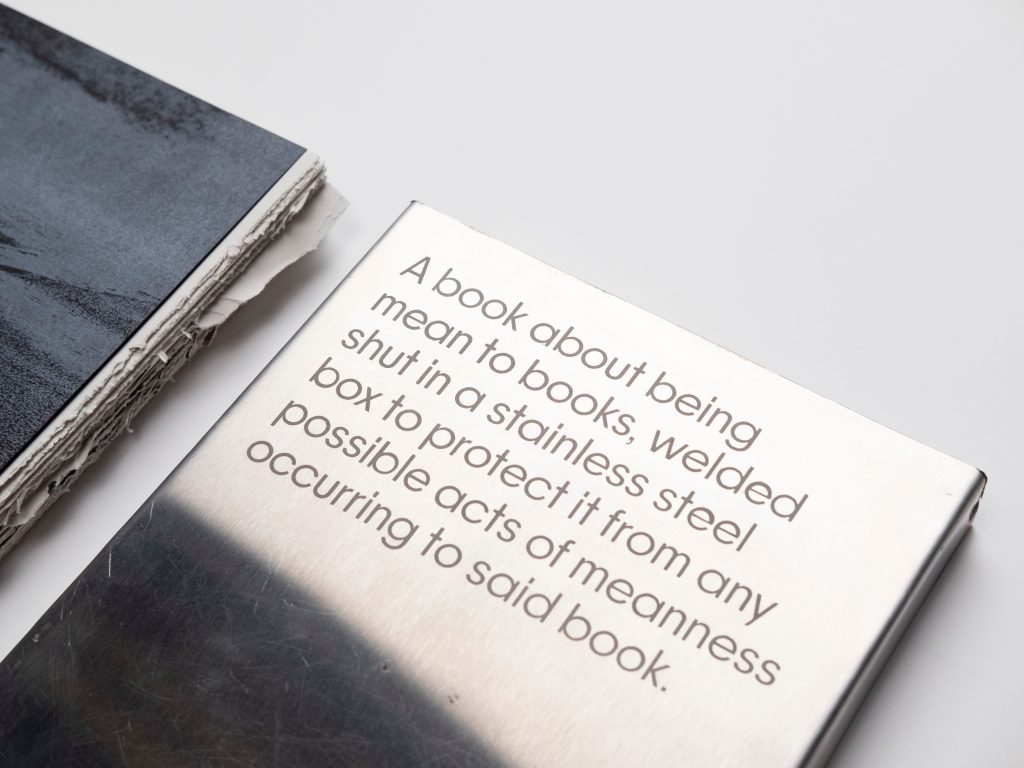
Second, a copy of said book welded shut in a stainless steel box to protect it from any possible acts of meanness occurring to it.
As much as my work was an exploration of books, it was also a place where I came to further understand myself as a reader, designer, practitioner and simply a person.
What were the catalysts/inspirations for undertaking post-grad and this particular project?
I began my research planning to explore the future of the book. Unexpectedly jumping straight into a master’s after completing my honours, I was burnt out. I didn’t have a solid thought on what I really wanted my Master’s to surround, but I knew how much I loved books. Maybe I even wanted to prove to myself that I hadn’t ended up in a field that was going to fall out from under me in a number of years. In a roundabout way, I think my work still ended up proving how alive books are. Through the nature of making, exploring and being open to the possibility and potential of the work, it naturally manifested into what it became. But believe me, I never set out with the intention to be mean to books.
What insight can you give us into your design process?
I need to make in order to understand. This project was conducted through an auto-ethnographic and practice-led research methodology. I entered without expectations, listening to the work, the books, to direct the project.
I’ve learned that sometimes it best to simply jump in and begin. Not having a solid idea in the beginning can actually be a good thing because you’re more open to the way work can develop. This project emerged out of doing, exploring and failing. While I can see the threads of the work back to ideas in my honours project, I didn’t begin knowing what I was doing.
What has been the most challenging part of your research thus far? How did you overcome it, or are you still working to resolve it?
My master’s was not a linear journey, for a long time, I didn’t exactly know what this work was. My masters began as an exploration of the future of books. However early on, it became clear that the project was shifting away from that initial idea. I was doing rather strange things to books without yet fully understanding why. Being comfortable with the uncomfortable; learning to trust myself, the process and that the work would eventually reveal itself was a difficult feeling to sit with for an extended period of time. But I think this feeling was essential for the development of the work and it has been a valuable mindset to have post studies.
How has post-grad study impacted your design practice?
My research further shaped my relationship and understanding with books. I ended my undergrad knowing that I had a passion for book design but my master’s reshaped this. Books are no longer something which I simply read or design, they are inseparable from who I am. To be mean to books through my masters was vital for strengthening and deepening my understanding of them as cultural and social objects.
As a designer I am only the beginning of a books life, and it is my job to make the object desirable for a reader to want to interact with it. But it is up to each individual reader to choose how and if they interact with the book. While I hope that people don’t go on to use books I design as plates and read them in the shower, at least I’ll know the objects I’ve created are held in such high regard for a reader to need to do this.
Why did you choose this particular program/university/qualification?
As I mentioned earlier, I didn’t have any plans to continue on to a post-graduate degree. If I did, I thought it might be in Denmark, England or Switzerland many years down the line. However, being offered a scholarship out of my undergraduate degree, it was a no-brainer to continue my studies at Massey.
I initially chose Massey for my undergraduate degree because I quickly realised that I wasn’t simply going to be a number in a lecture theatre. I was going to get a hands-on and practice-led education, in a studio environment where I would build genuine relationships with my lecturers and peers.
I’ll never forget when one of my lecturers casually mentioned in class that he was dyslexic. The sense of relief that washed over me as I had always thought it was something to hide. That sense of belonging is what defined my time at Massey. The connections that I’ve built with the people who surrounded me for five years, that I now have the privilege of working and collaborating alongside.
Socials
Instagram
Toi Rauwhārangi, College of Creative Arts, Massey University