Five Minutes with… Carol Mackay
Members of Design Assembly make up a network of creatives working together to build a thriving design scene in Aotearoa New Zealand. Our ‘Five Minutes’ series profiles the breadth and depth of design practice in our network.
Today we speak with Carol Mackay from Design Business Council, who helps translating the indigestible business stuff into bite-sized chunks that help designers build confidence and make better decisions.
Tell us about your career background:
In 1984 I co-founded Mackay Branson Design with Greg Branson. Over 30 years we built a studio with deep expertise in a few key industry pillars. One of my specialities was dispute management – I worked with Ombudsman schemes, the Emergency Services sector and the Courts.
It wasn’t sexy, award-winning design. But it helped vulnerable people access goods and services they may not have otherwise known about. Design in service of people who genuinely needed it.
That work taught me two things I carry with me every day: the value of having a clear superpower, and how to translate hard-to-understand information into something palatable and actionable.
I now use exactly those same skills with creative business owners through the Design Business Council – translating the indigestible business stuff into bite-sized chunks that help designers build confidence and make better decisions.
Tell us about the studio you work in:
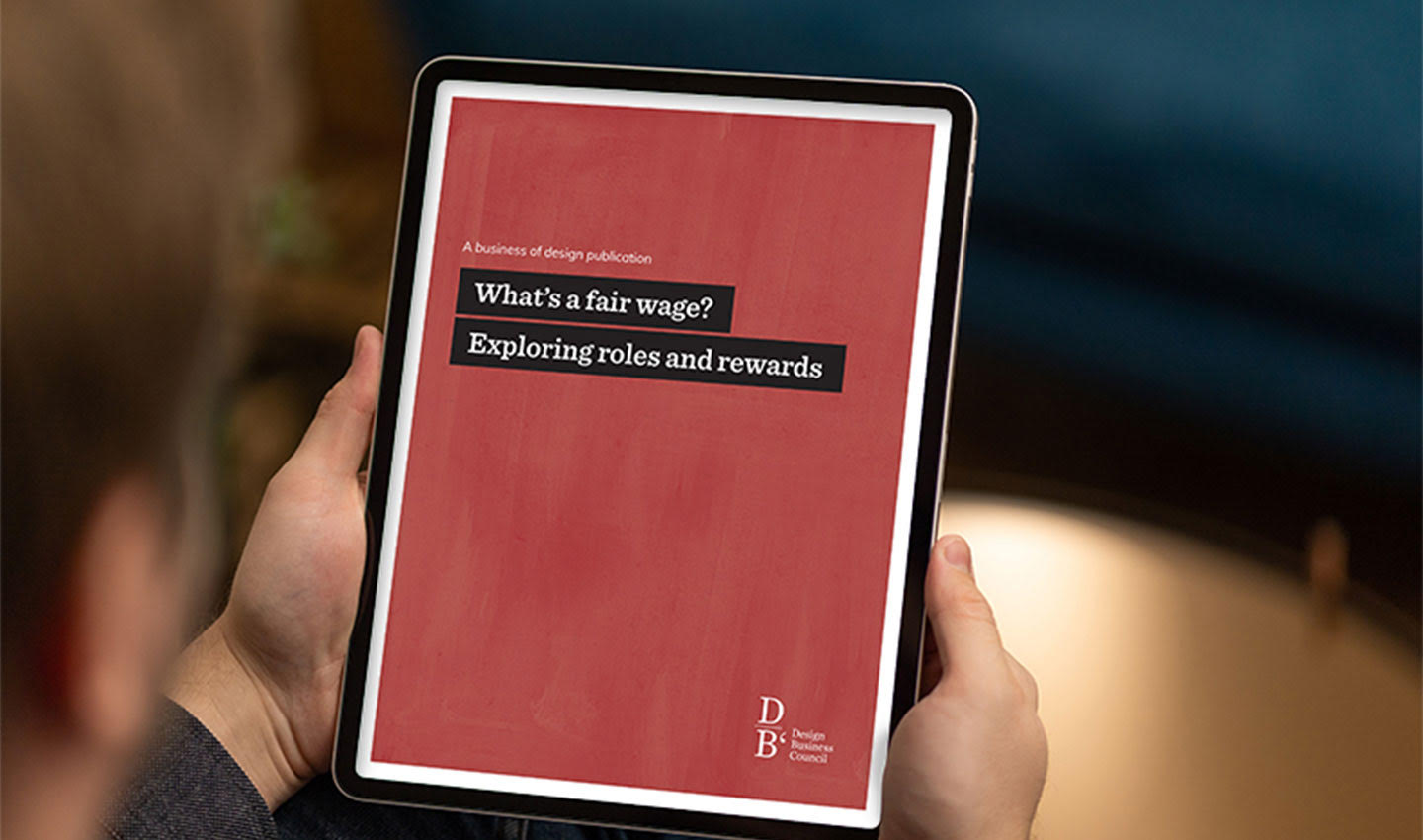
DBC isn’t a traditional studio – it’s a business advisory service for designers. We help designers build better businesses by mentoring one-on-one and in groups. We run workshops, write practical resources, and research the business of design. Our focus is entirely on helping Australian designers build robust, profitable businesses.
What does your design process and philosophy look like?
Visual communication design is fundamentally commercial. Not in a cynical way – but in the most purposeful way. Good design solves real problems for real people, delivering better goods and services, stronger businesses, and measurable impact.
It’s a problem-solving discipline first. Aesthetics matter, but they’re in service of something bigger – making complex things understandable, making difficult experiences easier, making organisations work better for the people they serve.
I also believe designers don’t truly compete with each other. We each have an ‘onlyness’ – a perspective shaped by our ancestry, education and background that no one else can replicate. That’s where the most authentic, powerful design comes from.
That thinking drives the Design Business Council too. When designers understand their positioning, their commercial value and their unique perspective, they become strategic partners rather than suppliers. That’s better for designers, better for clients, and better for the people those clients serve.
What does a typical day in your studio look like?
Happy to say in this stage of my career, I’ve built the day I want. It’s a mix of exercise, mentoring, writing, and research. We publish a weekly article every Wednesday and I illustrate that, so there’s always thinking, drawing and writing happening. I also spend time f2f or online with our mentoring clients – helping them research or unpack a challenge.
What’s one thing that you would like all of your clients to know?
Confidence in business decisions comes from knowledge, not experience alone. You don’t have to learn everything the hard way – that’s exactly why we’re here.
What are your favourite tools in the studio?
Honestly, conversation is my most powerful tool. Asking the right questions, listening carefully, and then translating complex business concepts into bite-sized, actionable chunks.
What are your favourite types of projects to work on?
Working with designers who are at a genuine inflection point in their business – ready to grow, reposition, or step into leadership. The transformation that happens when someone gains clarity is incredibly rewarding.
What project are you most proud of?
Always the last project we’ve done – in this case our ‘Conversations with designers’. We’ve had one in Melbourne, I’m in Brisbane for a dinner tomorrow night and Sydney is scheduled for next month. It’s gathering a table of creatives, from graduates to industry leaders to discuss what they’re seeing, what they’re thinking and what they’re feeling. I love the conversation around the table, the sharing of wins and loses and of community.
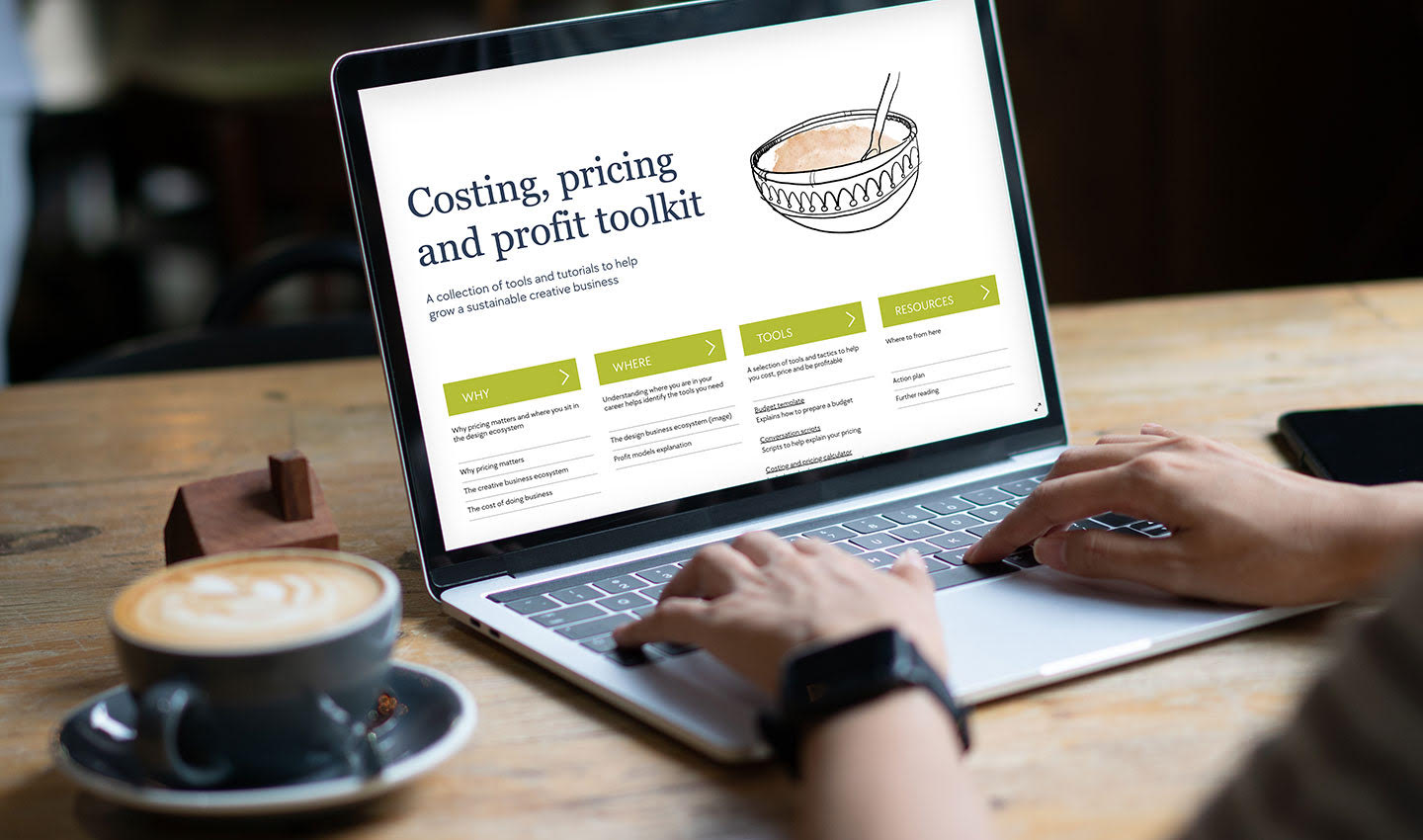
(I’m also really proud of our Costing, Pricing Profit toolkit. It’s a bundle of tools we use constantly and now we’ve gathered them together in a DIY framework so they’re accessible to all designers.)
Do you have any advice about our industry for emerging designers or career changers?
Firstly, don’t compare your start with someone else’s middle (or end).
Be patient. Building a career is not a sprint, it comes with a lot of sidesteps.
Be open to change and curious.
Learn the business side early. Design school teaches you to be a great designer – nobody teaches you to run a design business. The sooner you understand pricing, client relationships, and financial basics, the stronger your career will be because you’ll be a better employee, a better sole operator and a better employer.

Where do you draw inspiration from?
There’s a lot of negativity in the world, and I work hard at surrounding myself with inspirational people.
I draw inspiration from Greg, my partner. We’ve worked side-by-side for 44 years now, and his thinking still inspire me.
I’m on the board and volunteer for Never Not Creative – I love what Andy Wright has built, that’s inspirational.
And for the past decade I’ve met a bunch of designers monthly for breakfast in a cafe in Melbourne. Each of them is inspirational in different ways.
Lastly but not leastly, the designers I work with inspire me. Their resilience, creativity and adaptability is constantly inspiring.
What hobbies or interested do you have outside of work?
I know it’s a stereo-type but I’ve done pilates twice a week for over 20 years. I love it. It’s like playing chess with your body.
I draw people, clothed and nude.
I lost drawing for a while but I gave myself a brief when I started using them (to replace stock photography) in our weekly article.
I love my balcony garden and I volunteer at Never Not Creative.
Where can people connect with you?
LinkedIn: Carol Mackay
Email: carol@designbusinesscouncil.com
Website: https://designbusinesscouncil.com/
Instagram: @designbusinesscouncil
Private instagram: @gardeningonabalcony
Do you have a question for Carol?
Join us for Join The Dots: Trans Tasman Edition on 30 June, 12 – 1pm NZT, where Carol will be part of a live conversation, along side Greg Branson and Liz Archer-Fisher, exploring design, business, leadership, and what we can learn from our creative neighbours across the Tasman.
Free for Design Club members.
Need your member access code? Email info@designassembly.org.nz
Save your spot:
https://events.humanitix.com/design-assembly-join-the-dots-june-2026