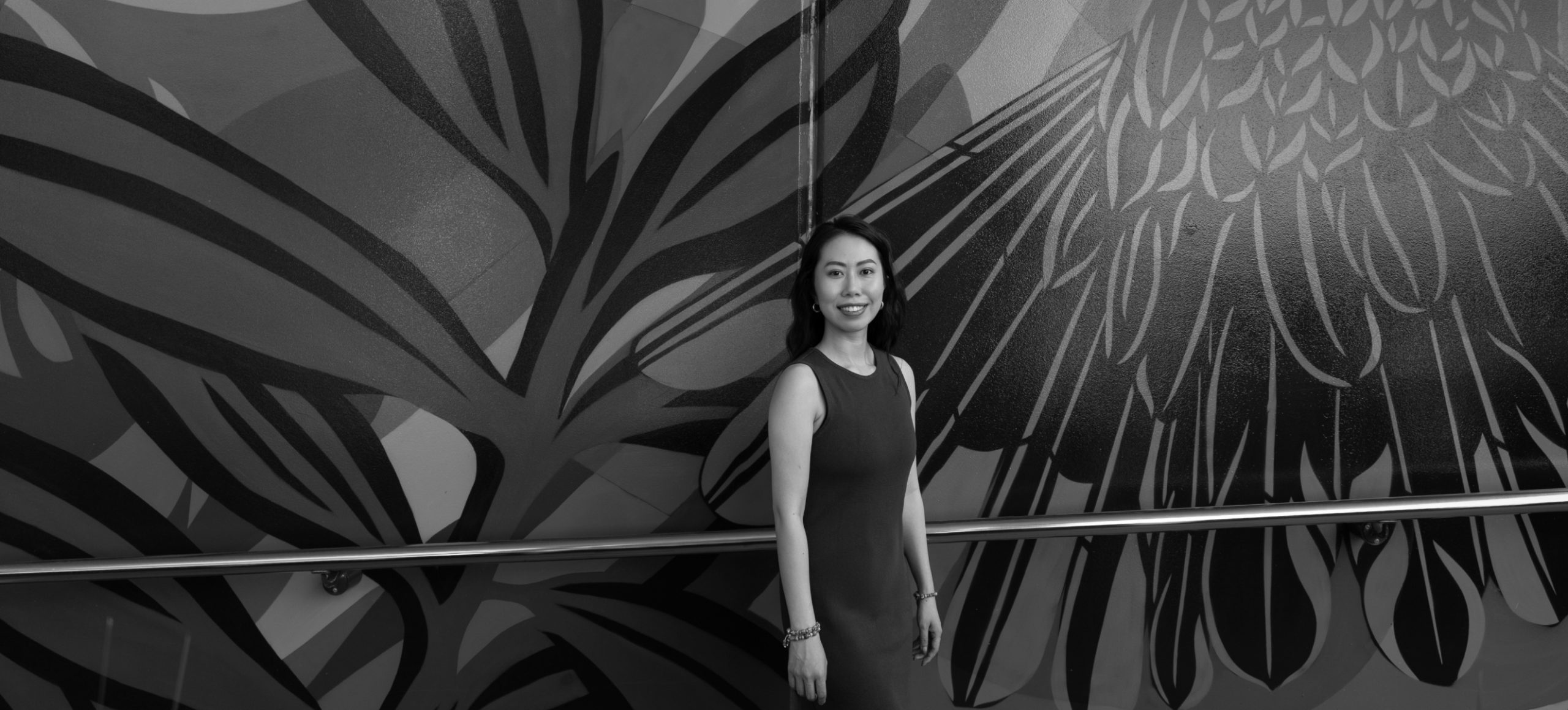
Five Minutes with… Montina Xu
Members of Design Assembly make up a network of Friends working together to build a thriving design scene in Aotearoa New Zealand. Our ‘Five Minutes’ series profiles the breadth and depth of design practice in our network.
Today we speak with Design Club member Montina Xu from PHQ, whose path into UX began with a natural curiosity for creativity, problem-solving and making experiences easier for people. After starting her career in luxury hospitality, Montina found her way into digital design and now works across UX/UI, interactive experiences and gaming for audiences throughout APAC. We chat about her collaborative approach to design, finding inspiration in everyday interactions, and creating digital experiences that are as engaging as they are purposeful.
Tell us about your career background:
My path into UX grew out of the things I naturally enjoyed. In school and university, I was the one putting my hand up to design posters, t-shirts, and landing pages for events. I didn’t know it then, but those little projects were my first steps into UX thinking.
After uni, I worked in marketing and management for luxury hotels – even there I gravitated towards changing workflows, improving guest experiences, and making touchpoints easier for people. Eventually, I realised that what I actually loved was problem-solving, which pointed me straight toward UX.
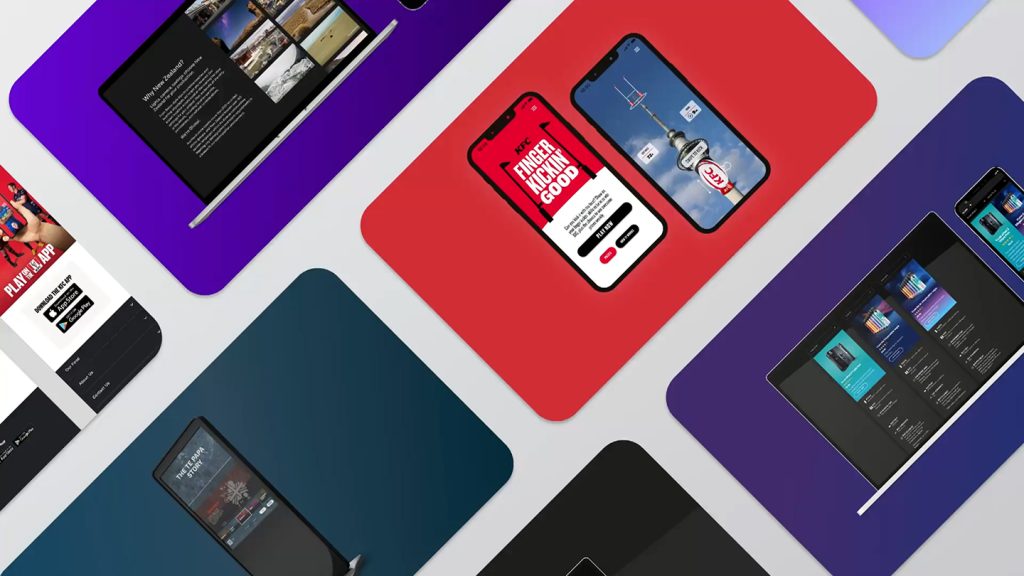
I studied interactive design and UX methodologies through the Interaction Design Foundation, supported by a 1:1 mentorship with a senior product designer in Australia, as well as a lot of helpful YouTube tutorials. During Covid-19, I freelanced for startups – designing app UI, social content, and websites to add to my portfolio. That led me into agency life as a digital designer, working on web campaigns and interactive projects for brands like KFC, Ministry of Education, Vuse, and Google Play.
My career hasn’t been a straight path, but on reflection, creativity, empathy, and making things easier for people are common threads in all I do.
Tell us about the studio you work in:
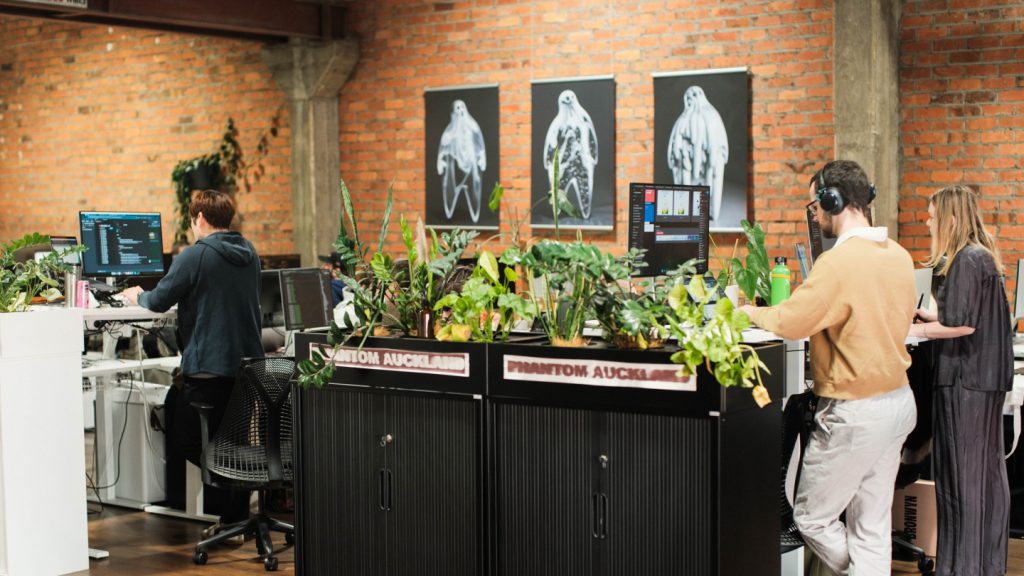
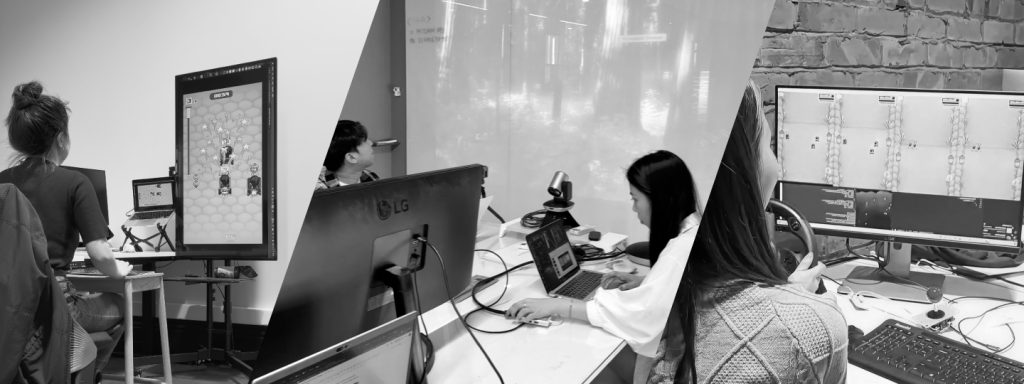
I work at PHQ, a digital-led creative studio where UX, engineering, storytelling, and interactive design all come together. We’re a very collaborative team, where designers, developers, and producers work side-by-side. This is so beneficial, as work is never siloed and UX isn’t treated as a single step. It’s a shared mindset.
I focus on UX/UI design for interactive digital experiences, with most of my work spanning across APAC, where gamers are a core audience. Because of this, my practice goes beyond visual design into understanding player behaviour and cultural nuances.
I work end-to-end across various experiences: From early user insight-gathering and framing the problem, to prototyping, interaction design, motion, and producing UI for web and in-game environments.
What I enjoy most is designing experiences that feel different, culturally relevant, and engaging. I also get to lead complex technical UX work and collaborate with in-house developers, who are always keen to problem-solve together. The team is a huge part of my workday – everyone is incredibly talented, slightly chaotic in the best way, and genuinely funny. It makes the work enjoyable, even when projects have their ups and downs.
What does your design process and philosophy look like?
1. Start wide, then focus.
I begin by exploring the problem through the user journey and competitor research. I sketch early ideas in Figma, or on paper, and turn them into simple flows or prototypes to test before refining. I also like to push creative concepts beyond the original brief, exploring ideas that might surprise clients or users. You never know which direction will land in the client’s mind.
2. Design collaboratively.
I stay close to developers, producers, and clients to ensure feasibility from the start. When a concept can be elevated with motion, illustration, or 3D, I involve other designers to push the work further.
This year, I’ve streamlined my workflow by spending less time in wireframes and instead jumping into high-fidelity exploration earlier. It helps communicate ideas more clearly and accelerates decision-making. Having the wider team involved early always gives me insights I wouldn’t get alone.
Internal design walkthroughs are central to my process. I present prototypes, motion mocks, and multiple routes to gather fast, meaningful feedback. I often explore 2–3 directions in parallel, each with a clear objective, so teams can evaluate ideas before we commit to deeper refinement.
3. Iterate with purpose.
I use feedback and any data available to refine further. For me, iteration is about making intentional, thoughtful decisions and finding the balance between user needs, business goals, and the creative vision.
Building good relationships is a big part of my philosophy. Working with developers is a collaborative process, so the friendly, open vibe at PHQ makes this dynamic process easy.
What does a typical day in your studio look like?
No two days are the same, but it often includes a mix of:
– Briefings and standups
– Coffee!
– Creating UI designs
– Structuring presentation decks
– Scoping for projects and outlining UX flows
– Presenting designs to clients
– Prototyping gameplay interactions
– Developing animation assets
– Leading design QA across devices (Android, iOS, PC) and relaying UX feedback internally
Recently, I have involved reviewing engagement data from past launches in my wrap report analysis. I use those insights to conduct UX audits to help inform future design decisions. The insights from previous campaigns play a big role in shaping our UX/UI approach, especially when clients return to us for new ways to engage their audiences and evolve their digital experiences.
This work is informing a very exciting interactive launch later this year, where we’re exploring new engagement opportunities, refining user journeys, and identifying ways to create stronger audience participation through design. At PHQ, we’re constantly exploring new ways to push digital experiences further.
What’s one thing that you would like all of your clients to know?
I really value open collaboration. When clients share context, data insights, and aspirations honestly, it allows me to design with purpose and intent. It also means we can iterate faster, align quicker, and ultimately deliver a high-quality experience that users genuinely enjoy.
What are your favourite tools in the studio?
My favourite tools support different stages of my design process. Figma is my primary workspace for design, prototyping, QA references, and seamless cross-team collaboration.
A few plugins I use daily are Contrast or Stark for accessibility checks. I use Mockup and Unsplash for stock images.
After Effects helps me explore early motion ideas and shape storytelling moments, while Jitter is ideal for quickly mocking up micro-interactions.
For inspiration, I often browse Muzli, CodePen, and the Game UI Database to study interaction patterns and game-focused UI. For market research and digesting large amounts of information, NotebookLM is also incredibly useful.
My sketchbook is still one of my go-to tools for mapping out high-level user flows before bringing ideas into design. I also use both Gemini and ChatGPT to develop visual concepts from references and sketches before refining them in my design workflow.
What are your favourite types of projects to work on?
I love projects that mix interactivity, storytelling, UX complexity, and technical collaboration – especially projects where I’m involved end-to-end, and I get to shape the experience holistically and connect all the dots.
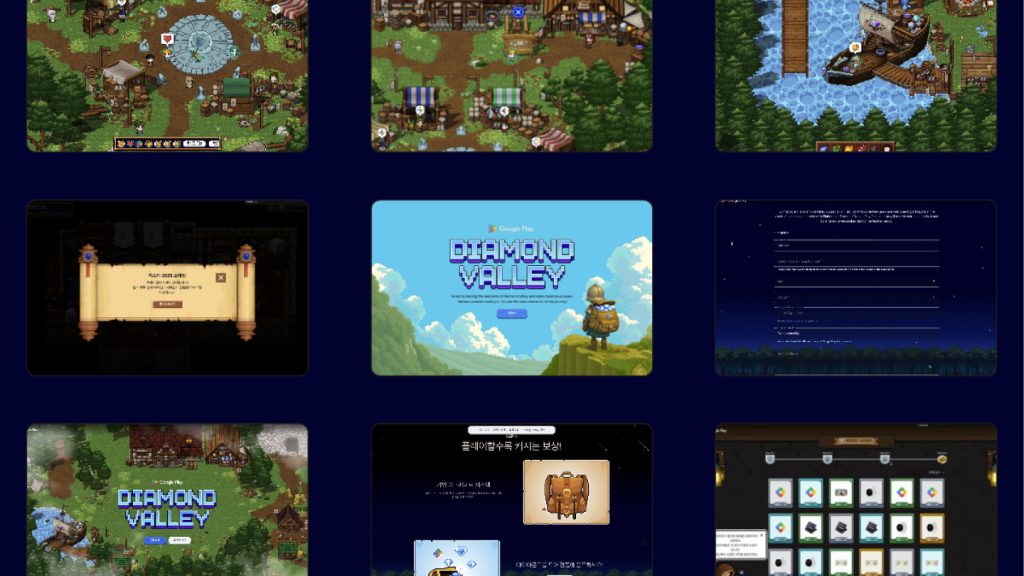
Our Diamond Valley campaign is the perfect example. It’s a gamified marketing experience for Google Play loyalty members, and it gave me the freedom to design how the story is told visually and interactively across the website and the RPG. It challenged me creatively, technically, and strategically, and it’s easily one of my career highlights.
What project are you most proud of?
One project I’m particularly proud of is our Google Play G-STAR minigame activation. I designed the full UX and UI for three arcade minigames – from how players onboard and understand rewards, to how the gameplay loop feels and ties back to the campaign strategy.
I also worked closely with a third-party Korean pixel art design studio Muchang, pushing the creative details from character animations to how the confetti bursts and the look and feel of ranking badges.
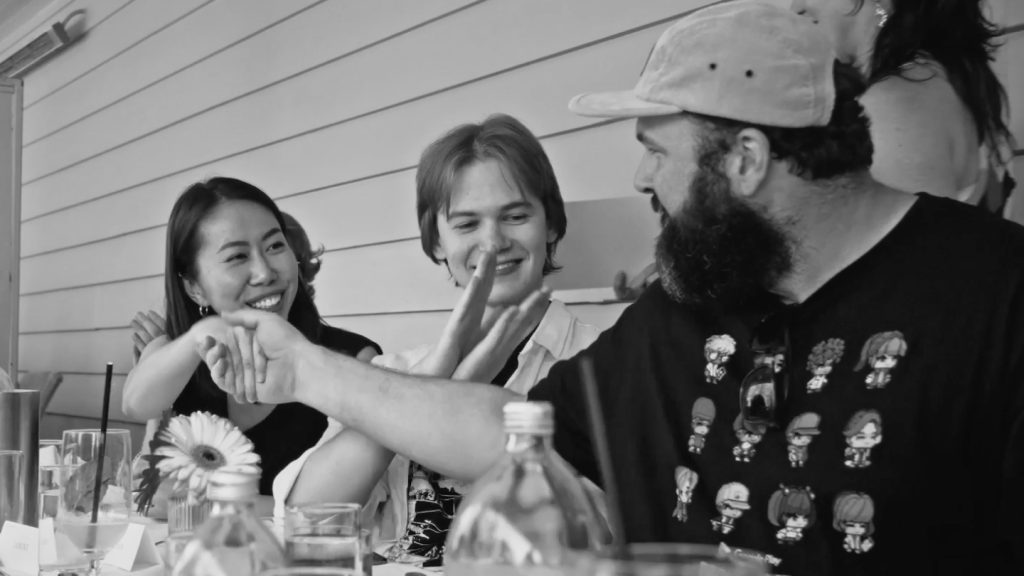
We went through intensive testing too. I created a prototype testing plan and ran face-to-face sessions with the client, which was super collaborative and really fun. Internally, we tested the game with the whole studio. We don’t always get to jump into each other’s projects, but this one brought the entire company together – everyone was playing, laughing, and getting (really) competitive.
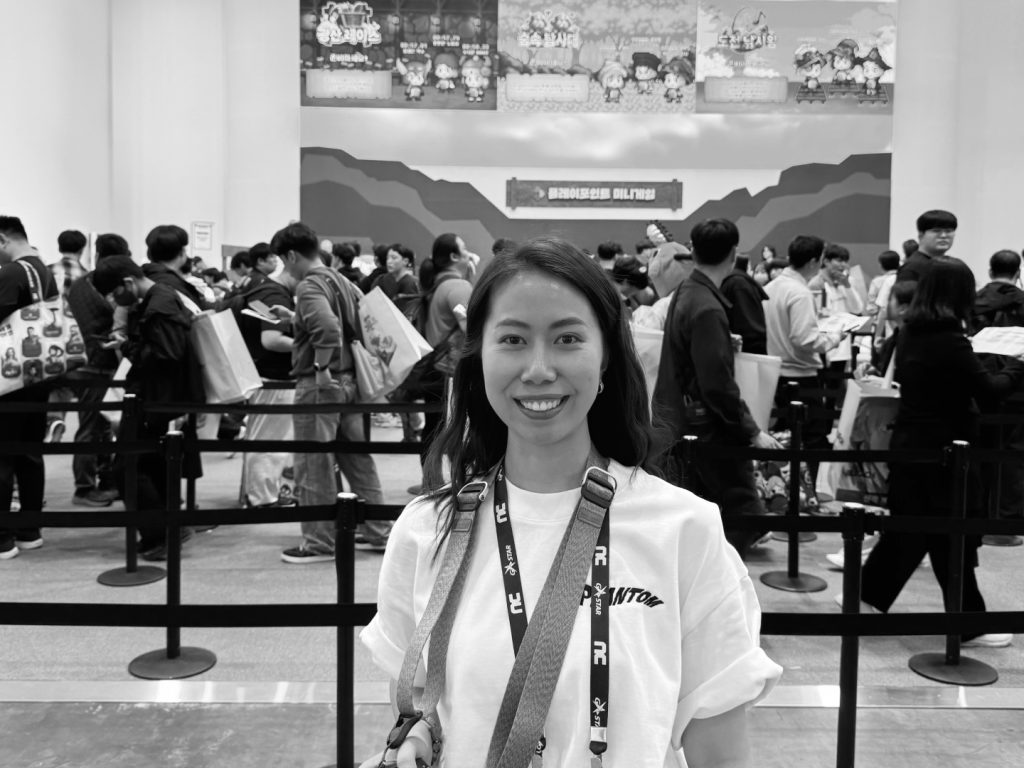
The highlight was seeing the minigames live in Busan. Watching real people genuinely enjoy and compete in frenzy modes, and celebrate right in front of me, was incredibly satisfying. It’s one thing to design behind a screen, but seeing the energy on the exhibition floor and the huge foot traffic at our booth made the whole project feel real.
You can check out more of the G-STAR project here.
Do you have any advice about our industry for emerging designers or career changers?
Start wide. Don’t box yourself into one skillset or tool too early. Try different things, explore multiple areas of design, and see what actually excites you. Being a jack of all trades at the beginning of your career is a good thing – you build a broad foundation, understand how different disciplines connect, and discover what you naturally gravitate towards.
A wide skillset also puts you in front of senior leaders with all types of backgrounds. Those people often become mentors or the spark that guides you toward a direction you may not have expected.
One more thing: Learn how to present well (honestly, it’s a lifelong skill!). Being able to articulate your thinking, express how you feel about your work, and present with confidence, is a huge part of being a great designer. It’s sometimes just as important as the design craft itself.
Where do you draw inspiration from?
I get most of my inspiration from everyday interactions. I’m always noticing how people move through spaces, how they react to friction or clarity, and what their behaviour says about the experience. I naturally slip into observer mode a lot; friends joke that I analyse everything.
I also love exploring new digital products and features just to figure out why certain decisions were made. A fun example has been reading people’s reactions to Apple’s Liquid Glass update. It’s interesting seeing how differently everyone interprets the same interaction.
When I’m working on projects with gamification, I’ll go back and play games like Mario Party to study the little details that make them so engaging. You don’t always notice good UX when you’re immersed in playing, so zooming in helps me understand what’s really driving the experience.
Talking with developers and other designers also gives me fresh angles. Everyone brings their own lens, and those conversations often spark new ideas. I also follow a bunch of design channels on YouTube – Nielsen Norman Group is also a good resource for best practices. It’s a nice mix that keeps me constantly learning.
What hobbies or interested do you have outside of work?
I love watching sci-fi movies and TV shows, they inspire me to think about future experiences. I also enjoy wandering through local vintage markets, travelling, and visiting art galleries whenever I can. Lately, I’m excited to learn more about AI in design systems, product strategy, and how designers can become more metric-oriented while still keeping strong craft and user empathy. I’ve also been busy planning my next trip to South-east Asia!
Where can people connect with you?
Emails – montina@phntms.com / montinaux@gmail.com
LinkedIn – https://www.linkedin.com/in/montina-xu/