Five Minutes with Tony Hsiung
Members of Design Assembly make up a network of Friends working together to build a thriving design scene in Aotearoa New Zealand. Our ‘Five Minutes’ series profiles the breadth and depth of design practice in our network.
Today we speak with Design Club member Tony Hsiung, whose creative career has taken a few unexpected turns. After working full-time as a graphic designer while studying, Tony stepped away from the industry to build his own construction company, all while keeping his creative practice alive on the side. Eight years later, he found his way back to the thing that made him happiest: design. Now, he’s combining two of his passions, design and sport, through an exciting role working with the Blues.
Tell us about your career background:
I studied Film and Design at Natcoll School of Technology before completing a Bachelor of Digital Design at AUT. While I was studying, I was also working full-time as a graphic designer, so it was a busy few years.
I was also really fortunate to be flatting with one of my best mates, Stacy Eyles, who I consider one of New Zealand’s best designers. Watching how he approached design had a huge influence on the way I think creatively.
After graduating, I took a different path and started my own construction company. I spent eight years in the building industry, but I always kept my creative side alive by freelancing in design and filmmaking. That gave me the chance to work on all sorts of projects and taught me how to adapt to different challenges.
Eventually, I realised that design was where I was happiest, so I decided to take a leap and return to the creative industry. After a few months of applying for roles, I was given an opportunity at Creative Story, which led to a trial with the Blues.
Looking back, I’m incredibly grateful to everyone who believed in me and gave me that chance. Being able to combine my passion for design with my love of sport is something I never take for granted, and it genuinely feels like my dream job.
Tell us about the studio you work in:
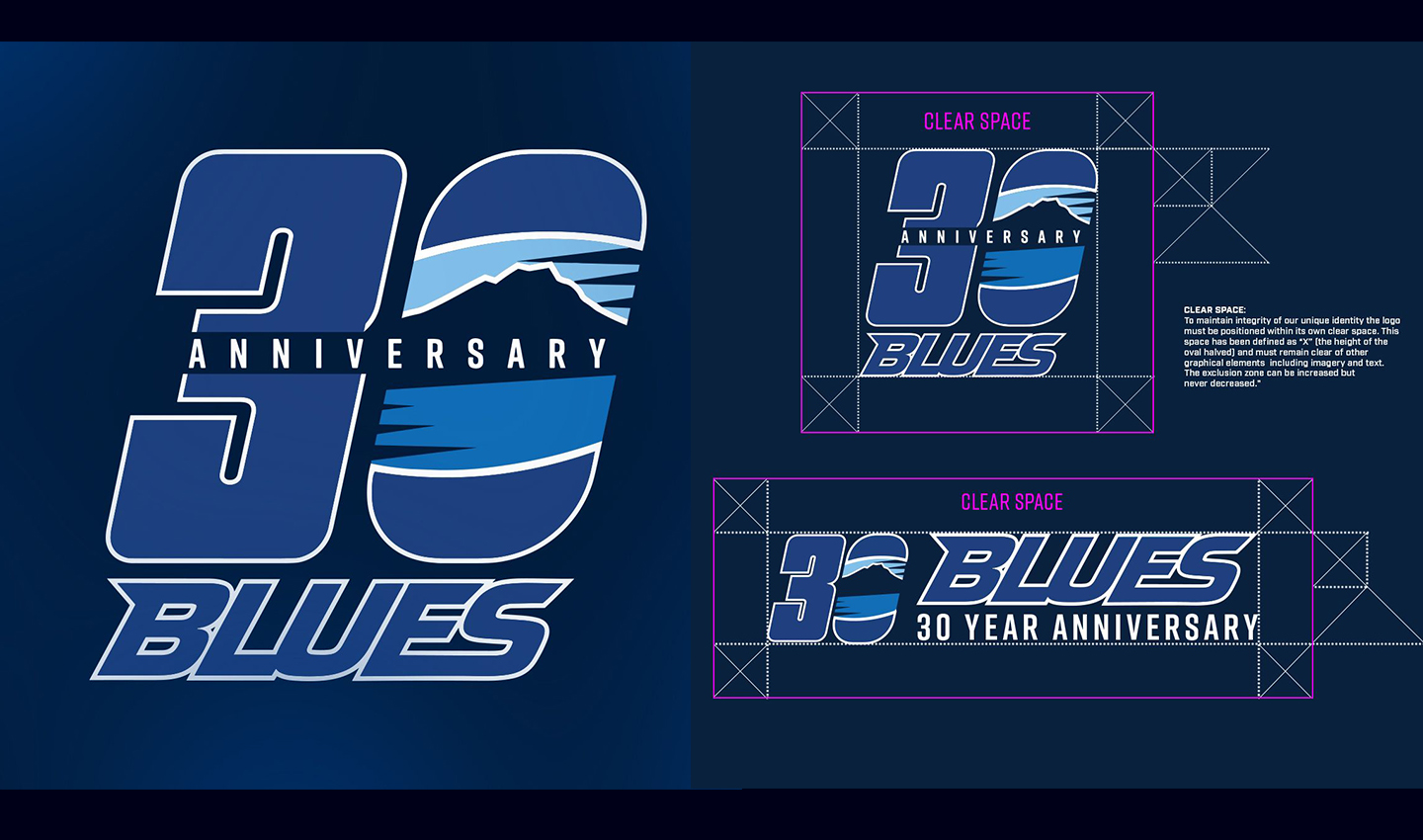
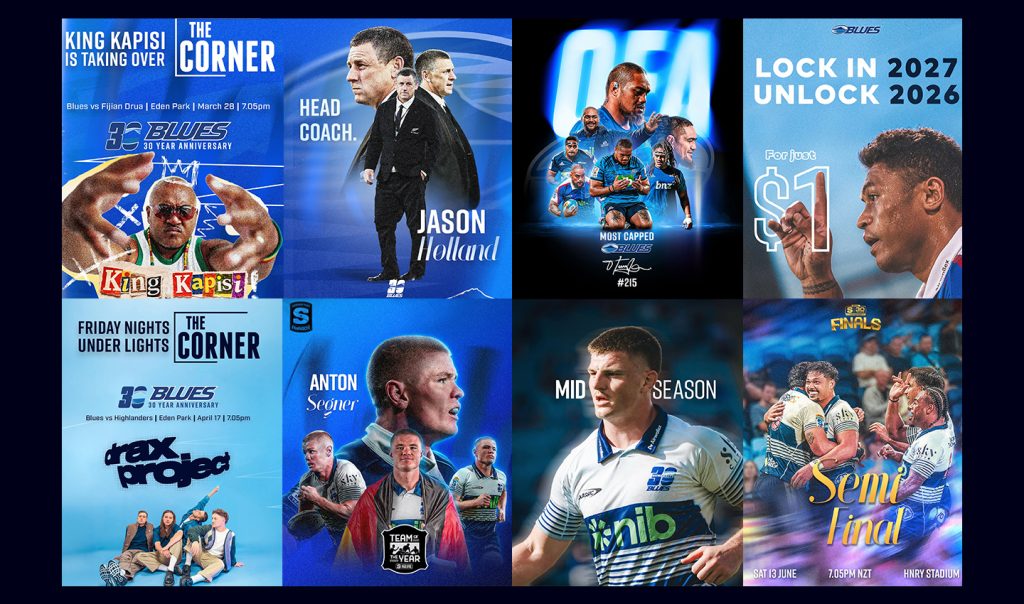
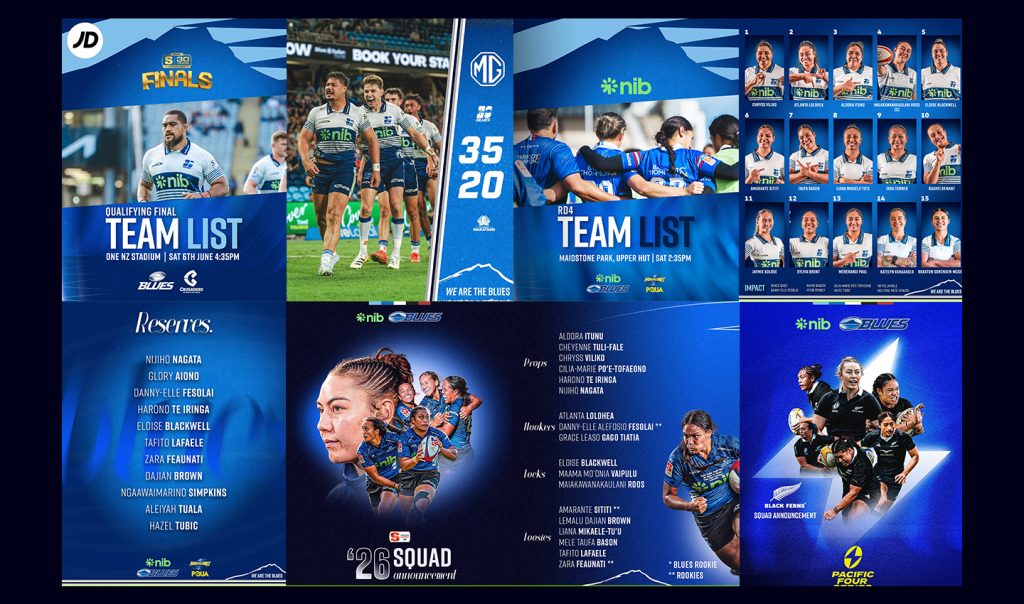
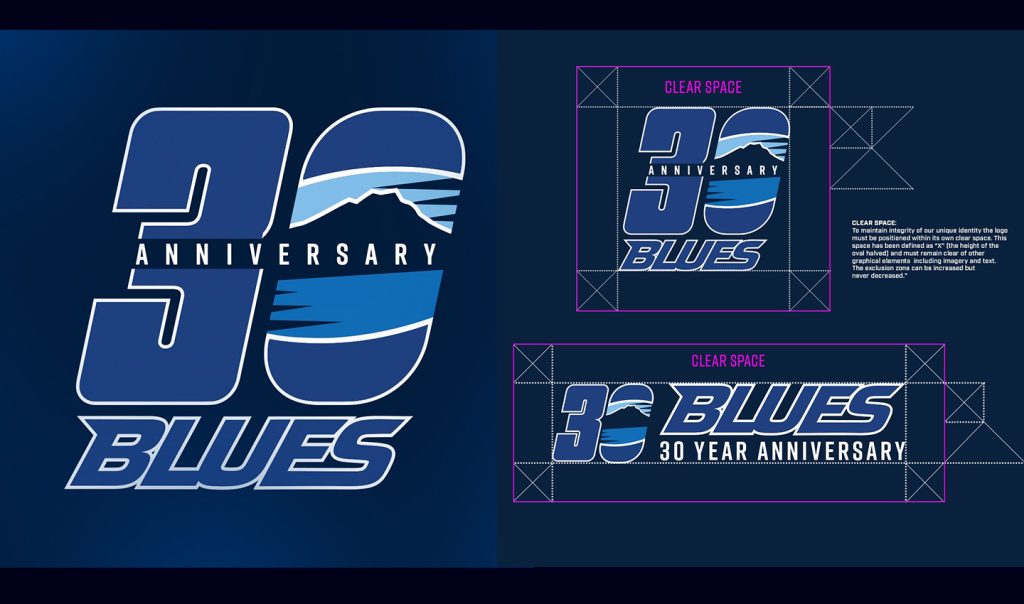
One of the things I love most about my role is the variety of work I get to be involved in. As the only designer at the Blues, I have the opportunity to work across almost every aspect of the club’s visual identity—from print design, apparel, and playing kit design, to digital campaigns, branding, and marketing assets. I also create motion graphics for our home games at Eden Park, designing content for the LED ribbon boards around the field and the big stadium screens to help bring the match-day experience to life.
The most rewarding part of my job is seeing supporters wearing something I’ve designed. It’s a great feeling knowing that the work connects with our fans and becomes part of their experience with the club. I also really enjoy the off-season, when we get to step back, explore new ideas, and shape the creative direction for the season ahead. It’s an exciting opportunity to push the brand forward while staying true to what the Blues represent.
What does your design process and philosophy look like?
My design process always starts with understanding the purpose of the brief. Before I think about colours, typography, or layouts, I ask myself, What am I trying to communicate? Is there a story to tell? How do I want people to feel when they see it? Once I have those answers, the creative direction usually becomes much clearer.
My philosophy is to first understand the fundamentals of design and why those principles exist. Once you have that foundation, don’t be afraid to bend the rules if it feels right for the idea. I think the best work comes from trusting your instincts, backing yourself creatively, and staying open to learning. No matter how long you’ve been designing, there’s always something new to discover.
What does a typical day in your studio look like?
A typical day at Blues HQ is never repetitive, which is one of the things I enjoy most about my role. Every stage of the season brings different priorities, so no two weeks are ever the same. During the season, there’s a strong focus on weekly match campaigns and creating content to engage our fans. In the off-season, we spend more time developing the creative direction for the year ahead, working on apparel, branding, and long-term projects.
The work itself is incredibly varied. One day, I might be creating themes and graphics for our high-performance team, the next, I could be designing sponsor assets, developing retail apparel, or producing marketing campaigns for upcoming games. With so many different areas of the club requiring creative support, there’s always something new to work on and plenty of opportunities to be creative.
What’s one thing that you would like all of your clients to know?
One thing I’ve learned is that the more thought that goes into a brief, the smoother the creative process becomes. Having a clear understanding of the goal, the audience, and what the client is trying to achieve makes it much easier to create something that hits the mark.
It’s also really helpful when clients can share examples of work they like. It’s not about copying those ideas, but more about getting a feel for the style or direction they’re after. I think the best projects come from good communication and collaboration from the start, and that usually leads to a stronger result for everyone.
What are your favourite tools in the studio?
My favourite tools to work with are the Adobe Creative Suite, particularly Photoshop and After Effects. What I enjoy most about Adobe is how seamlessly the programs work together, allowing you to move between applications and bring ideas to life efficiently. Whether it’s creating graphics, motion, or digital content, the possibilities are almost endless.
I’m always looking to expand my skill set, and one area I’d really like to develop further is 3D design. Learning Blender is something I’m excited about, as I think it would add another dimension to my work and open up new creative possibilities for branding, motion graphics, and storytelling.
What are your favourite types of projects to work on?
My favourite projects are the ones where I get to collaborate closely with people and develop ideas together. I really enjoy the creative process of bouncing ideas around in real time, refining concepts, and working towards a shared vision.
What I find most rewarding is seeing an idea evolve from a conversation into a finished piece that either matches or exceeds what the client had imagined. I love the problem-solving aspect of design—taking a challenge, finding a creative solution, and bringing it to life in a way that is both meaningful and effective. For me, the best projects aren’t just about creating something that looks good; they’re about creating something that connects with people and achieves its purpose.
What project are you most proud of?
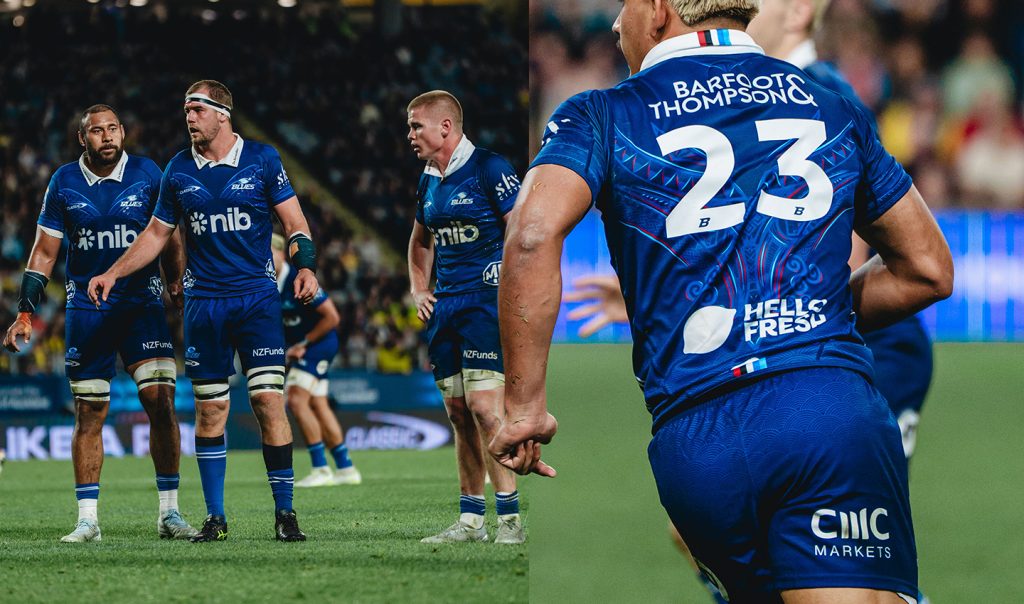
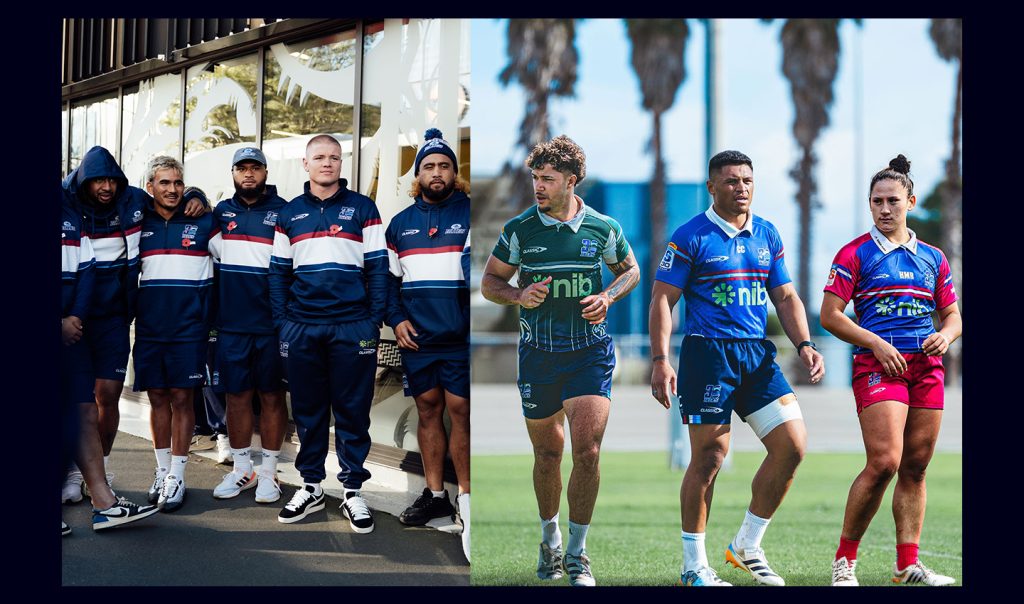
One of the projects I’m most proud of is the Blues 2026 Unity Jersey. The brief was to create a jersey that represented the people of the Blues region, so I wanted to tell a story that reflected the diversity of our community through design.
The project involved months of research and consultation with Ngāti Whātua, Auckland University academics, tattoo artists, and community leaders to ensure the cultural symbols were authentic and respectfully represented. The biggest challenge was bringing Māori, Pacific, European, and Asian influences together into one cohesive design that still felt unmistakably like a Blues jersey.
What I’m most proud of isn’t just the final design, but the process behind it. Every detail has meaning, from the cultural symbolism to the colours representing Auckland, North Harbour, and Northland. It’s a jersey that celebrates the idea that while we’re made up of many different cultures, together we form one community.
Do you have any advice about our industry for emerging designers or career changers?
My advice to young designers or career changers is to immerse yourself in the creative industry as much as possible. Go to galleries, exhibitions, workshops, and industry events—some of the best inspiration comes from stepping outside your comfort zone.
I’d also encourage people to connect with creatives who are better than you. It can be intimidating, but being around talented people will challenge you, raise your standards, and help you grow much faster.
Finally, don’t be afraid if your career path looks a little different. I spent eight years in another industry before returning to design, and those experiences have shaped the way I think creatively today. Stay curious, keep learning, and back yourself.
Where do you draw inspiration from?
I get a lot of inspiration from movies, music videos, and even anime—anything with moving images, really. I love the use of colour and framing in films, and I’m always inspired by the creativity and storytelling in music videos. There’s also something about the weird and wonderful world of cartoons and anime that really sparks my imagination.
I also find inspiration in conversations and the people around me. Sometimes an idea will pop into my head halfway through a chat, or I’ll notice a small detail that sparks a new concept. I think the best ideas often come when you’re not forcing them—they’re everywhere if you’re open to seeing them.
What hobbies or interested do you have outside of work?
Outside of work, I like to stay active. I really believe in the saying, “a healthy mind in a healthy body.” Keeping physically active helps me switch off from work, clear my head, and come back feeling refreshed and ready to be creative again.
I also enjoy exploring filmmaking and photography. I recently invested in a Sony FX30, and I’ve been having a lot of fun experimenting with it, learning new techniques, and finding different ways to tell stories through film. It’s a great creative outlet outside of my day-to-day design work.
When I have some downtime, I love picking up the guitar. I can easily lose a couple of hours just playing, and it’s another way for me to relax, unwind, and let my mind wander.