2025 Hot New Things: Cat Parkinson, Te Herenga Waka–Victoria University of Wellington
Design Assembly profiles a selection of the top graduates from the best Art and Design Schools in Aotearoa New Zealand. We welcome these talented emerging professionals to our industry, learn about their passions, final projects, developing creative confidence and ambitions for the future.
Cat Parkinson has graduated with a Bachelor of Design Innovation majoring in Fashion Design Technology and minoring in Industrial Design from Te Herenga Waka—Victoria University of Wellington. Find out more about undergraduate and postgraduate study options in art and design by visiting our Design Schools page.
Tell us a bit about yourself:
I’m Catherine Parkinson, my friends call me Cat Park. I grew up in beautiful Ōtautahi and proudly attended Avonside Girls High, post-quake, east side.
When I was small I made fairy houses in the garden from sticks and flowers. In high school I welded second hand bicycles together into electric go-karts. In my early adulthood I sold upcycled jewelry at various markets across Ōtautahi. I completed a diploma in Fashion at Te Pukenga, for my final capsule I made my redundant school uniform kilt into a warm jacket. I am a maker by nature and I like to use my eyes a lot.
Having the opportunity to pursue study in a Bachelor of Design Innovation majoring in Fashion Design Technology and minoring in Industrial Design is a privilege I am very grateful for.
What was the focus of your graduating project?
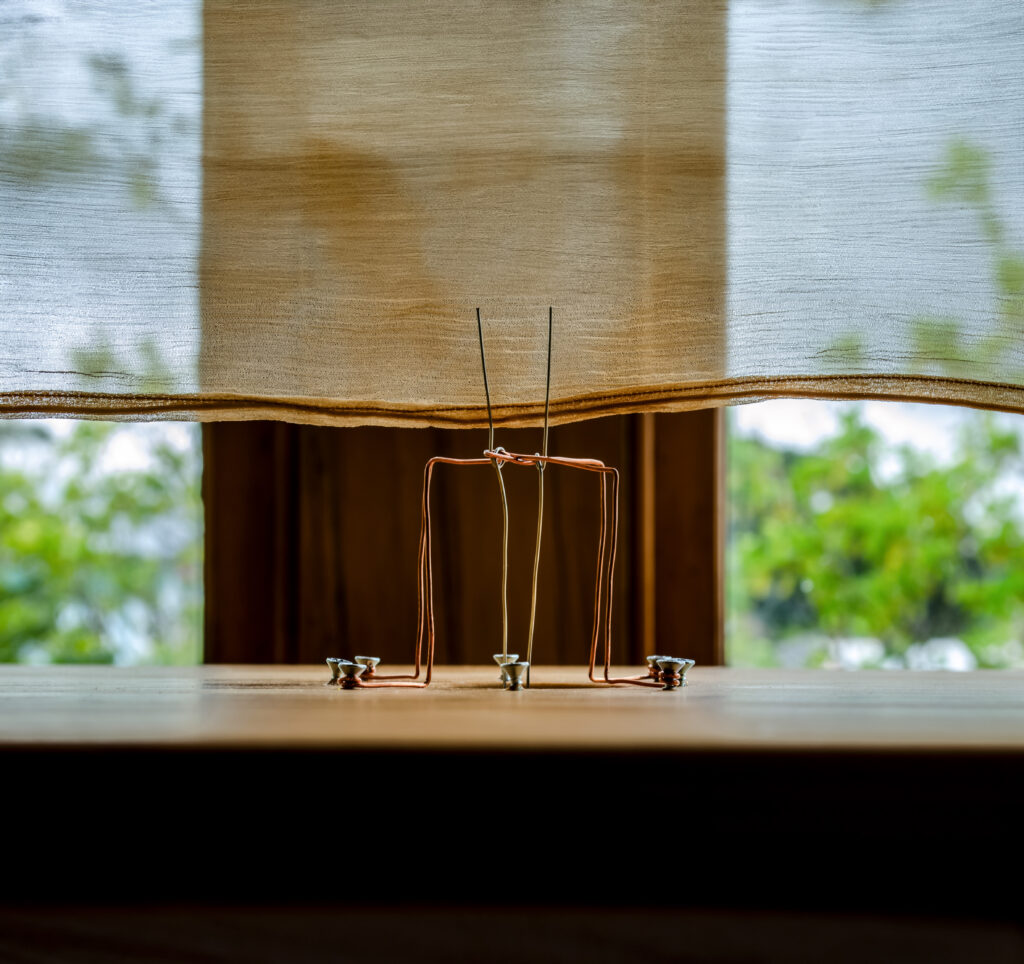
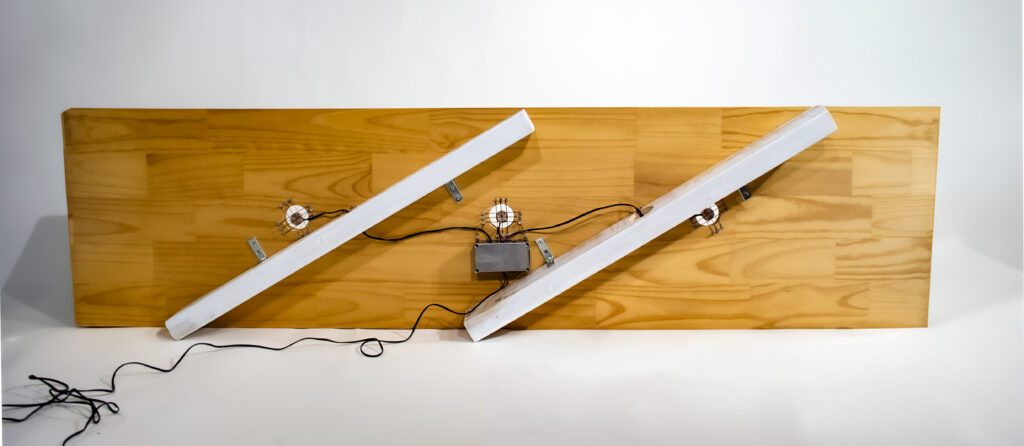
I developed a prototype for a kinetic textile sculpture using electromagnets and silk, as a post-digital, avant-garde approach to textile art. I took this as an opportunity to take creative risk, experiment and learn through material exploration. My aim was to intentionally animate the fabric without a body by using technology to control the natural force of magnetism, the force that upholds our planet and life itself.
Inspired by animistic belief systems, I wanted to challenge the notion that human behavior and tradition is superior to the objects, plants, and materials on this earth and how technological advancement can be explored positively for environmental harmony in rigid manmade processes. This design process and thinking offers a visual metaphor of how fashion systems can evolve with technological advancement to meet the environmental and ethical challenges they face. However, my work welcomes discussion and reflection from its audience. More iteration aims for interdisciplinary collaboration—across sound, lighting, media, art, fashion, and costume design as possibilities for interactive and performative textiles in installation and beyond.
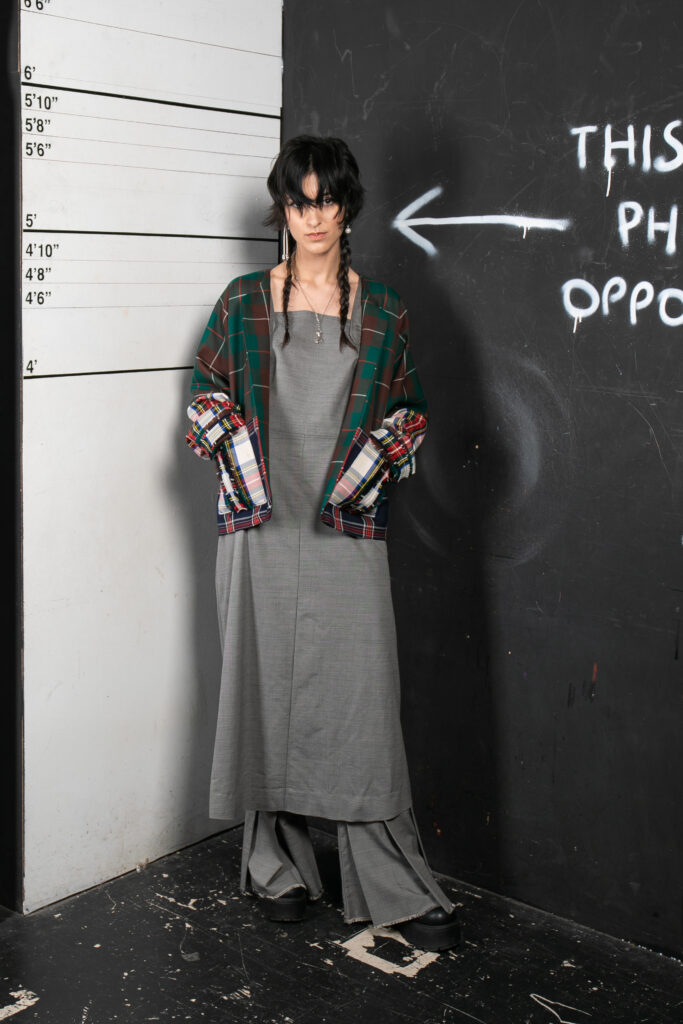
Why did you choose to study Fashion Technology at Victoria University of Wellington?
The course breaks from traditional fashion programs by inviting multidisciplinary thinking, cross-contextualization, and experimentation.
I had the privilege and freedom to engage with other disciplines and areas of design such as industrial design, media design, creative electronics, photography and interactive design in application to a broad education in fashion, textiles and fashion systems.
What did you enjoy most about the design programme?
It pushed me out of my comfort zone (away from a sewing machine and into an electronics lab).
I enjoy problem solving.
The purpose of my academic work has been investigating technologies to increase transparency and traceability in the NZ fashion industry such as blockchain, near infrared spectroscopy for textile recycling, decentralization, radio frequency identification and near field communication.
It is important to mention the fashion industry is undertaking a global shift and is clambering amongst new technologies for good and for unethical, unsustainable evil.
I view the dire environmental and ethical issues, caused by global fashion systems and textile & apparel supply chains from a unique cross-contextual standpoint. I follow preceding movements of ethical technological advancement in this field occurring in Finland, Sweden and the EU.
I am privileged for the wisdom and creativity from the academics I learned from. I enjoyed the diversity of this degree and the ability to access specialized technical resources.
I made good friends in many class discussions; these often felt like the knights of the round table, each of us expressing perspective, insight and knowledge from our respective areas and majors.
What was your biggest challenge while studying?
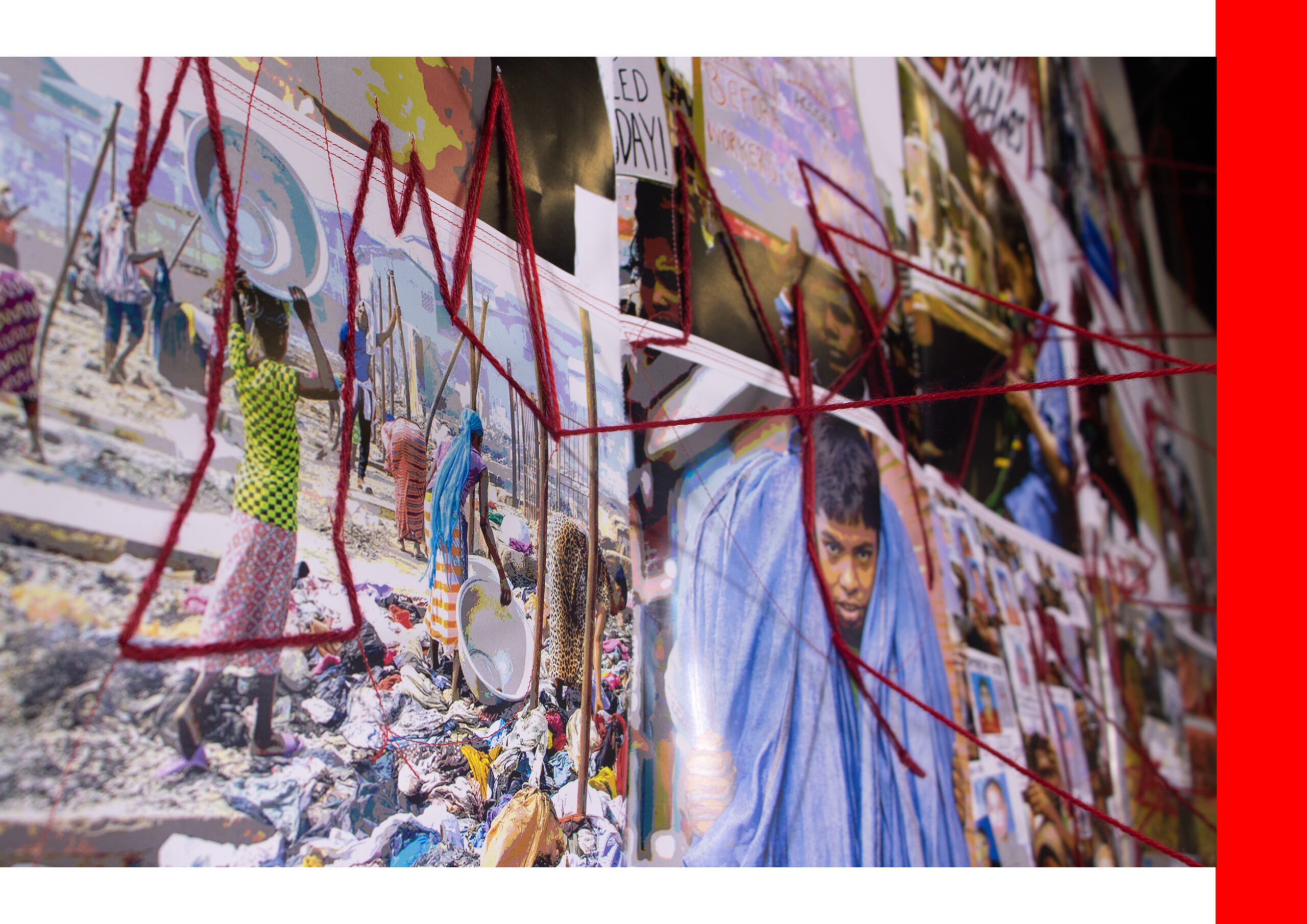
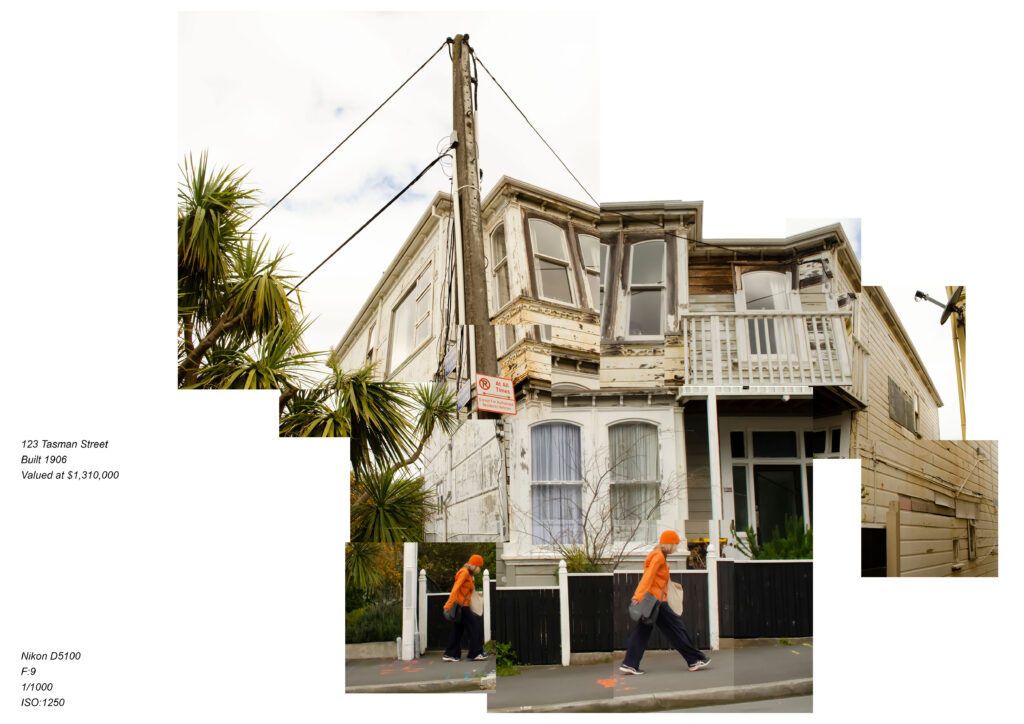
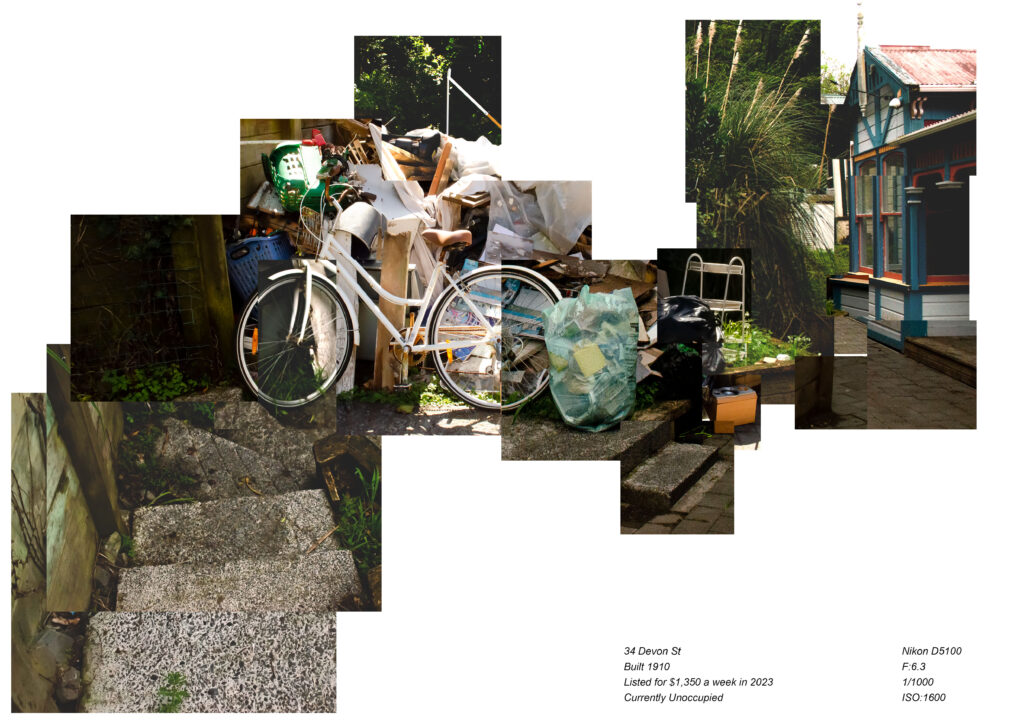
Finding a pet friendly rental in the capital as a student, which resulted in a project on the state of rental housing in Te Whanganui a Tara.
Inspired by the depth of photographic works by David Hockney, I collaged single images of burnt out properties together, highlighting degradation, age and condition. I then captioned the final images with each property’s market value–I had to get an extension from my studies because I was at a tenancy tribunal. It was an incredibly punk, yet fruitful time.
Who inspired you to pick design as a career path?
My Mother and Father. Their hard work, kindness and encouragement.
Who is your favourite designer/artist/creative?
Theo Jansen. I discovered his kinetic creations when I was young and have since been infatuated with how magical they are. At the moment, I love the simplicity and surrealism of Jonathan Anderson in his namesake and his work for Loewe. I am also very inspired by interdisciplinary pioneer Neri Oxman.
What piece in your portfolio are you most proud of?
The Mindful Materials Exchange. This is a decentralized trading application I designed for the organization Mindful Fashion NZ. It unites the industry members and partners of the not for profit-organization with fashion students in Aotearoa to trade excess materials, then accredits all parties in a secure blockchain. This is linked to a garment by a QR code embedded by the creator’s will. Fostering connections between industry, students and consumers while negating excess material and allowing traceability to the consumer.
This concept was from a blockchain oriented design paper in 2023, led by Waalter Langelaar.
What’s next for you?
I’m going to make lots of art.
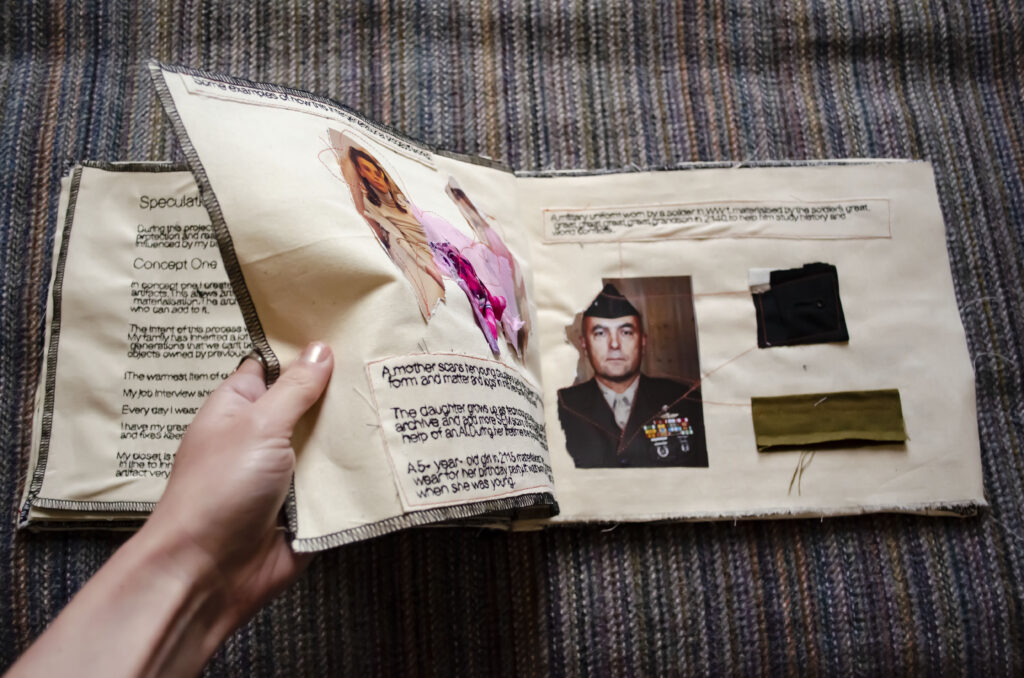
Over the past few months I’ve been transferring and merging my skills into what I call a “found practice”. I’m working on a series of mixed media kinetic sculptures using found objects from nature, urban environments and electronic components.
I’m exhibiting these works at Massey University in late October 2025, there will be some details on my Instagram account soon!