Five Minutes with Chris Brunner
Members of Design Assembly make up a network of Friends working together to build a thriving design scene in Aotearoa New Zealand. Our ‘Five Minutes’ series profiles the breadth and depth of design practice in our network.
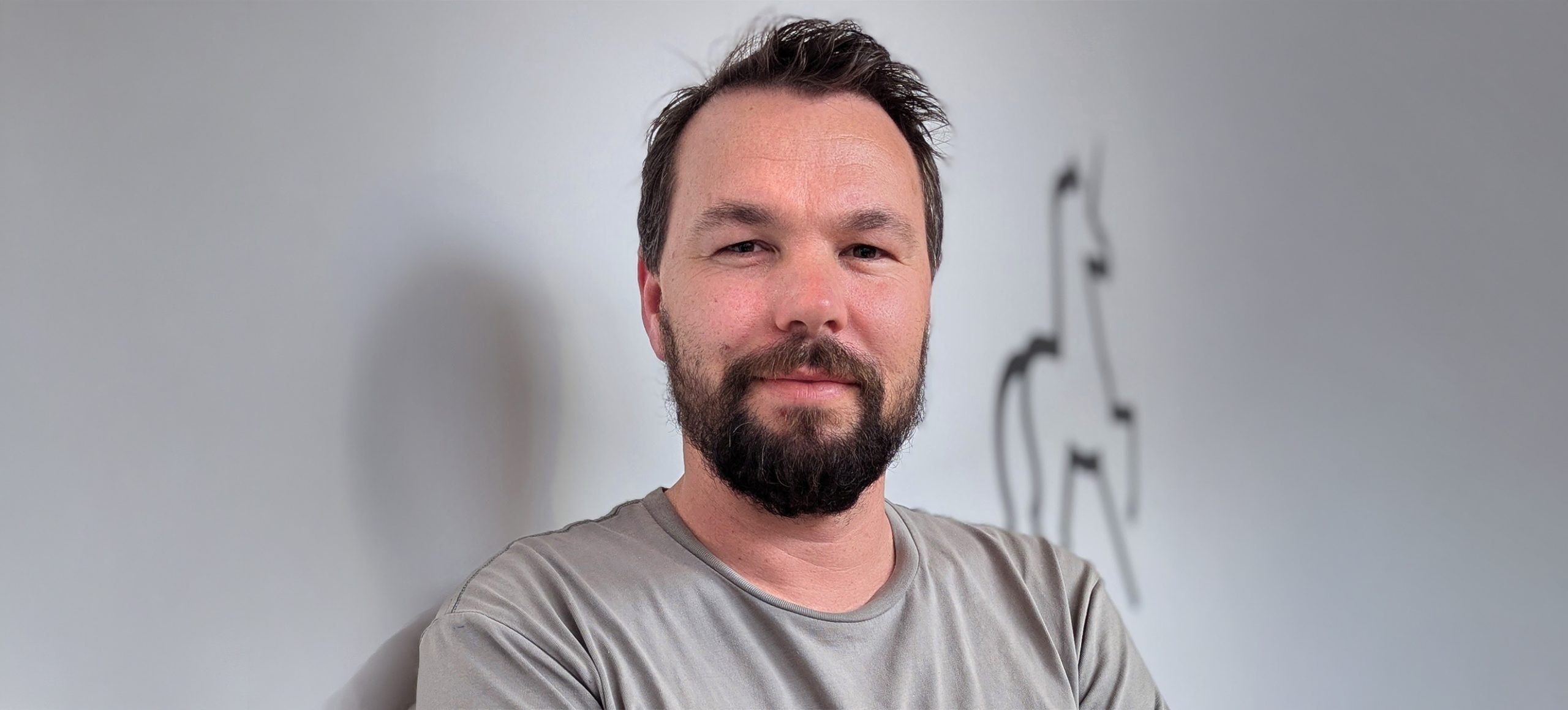
Today we speak with our Friends Chris Brunner who currently works in an agency role at Digitas based in New Zealand.
Tell us about your career background:
I’m currently working in an agency role for the first time. Before returning to NZ, my experience was largely within in‑house environments, focused on design, content, and experience. I also spent a significant amount of time working in the UK within the healthcare sector, which is a fascinating space for design – often impacting decisions related to health and recovery journeys.
That experience really shaped my interest in the role of design as a way to make a meaningful difference in people’s lives, particularly through the experiences they have with products, services, and systems. Over time, that led me to focus more closely on content as a design medium. I’m especially interested in content design – treating words with the same care as visual design, grounding them in research, and helping people interpret, navigate, and experience information in a way that feels intuitive and human.
Tell us about the studio you work in:
I work at Digitas, a global agency with over 50 offices worldwide. Here in New Zealand, we’re a relatively small team working on significant brands. We work closely with our colleagues in Australia, where the team is a bit larger.
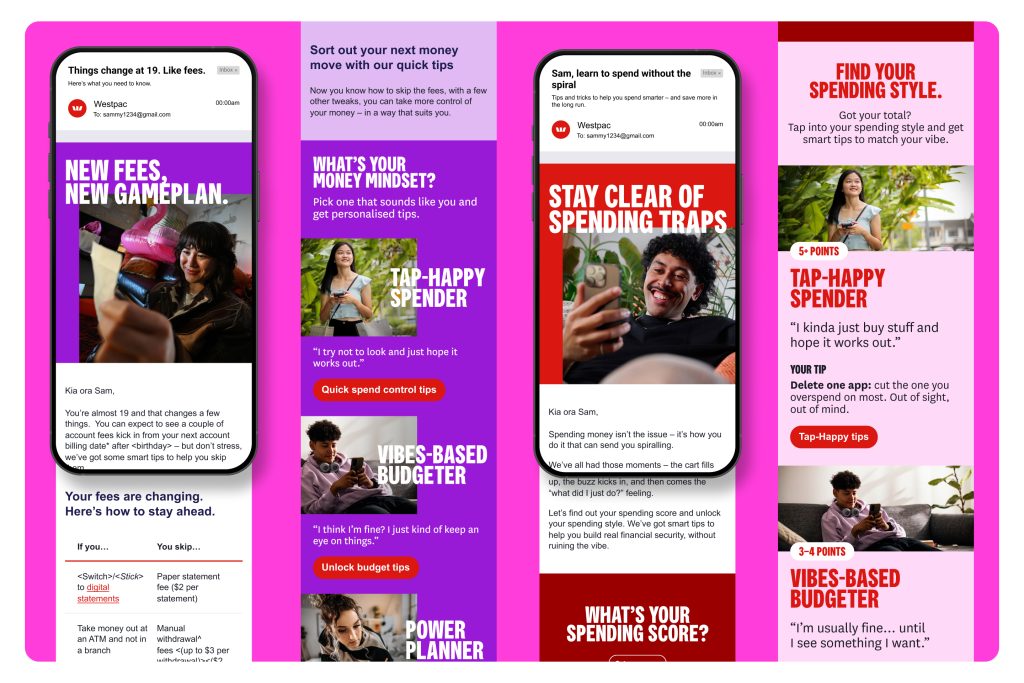
Our work spans digital interfaces and communications, with a strong focus on customer experience. At Digitas, we talk a lot about “Connected Experiences” – designing across channels and touchpoints so customers feel genuinely connected to a brand. That might include personalised interactions, thoughtful design across platforms, and carefully considering how people engage with a brand in different contexts.
What I enjoy most about my role is supporting the team. My favourite days are when we’re tackling a big problem together – not working in silos, but bringing everyone into the room to solve one challenge collaboratively. Those moments are incredibly energising, and I love leading a team that works so well together and consistently produces thoughtful, impactful work.
What does your design process and philosophy look like?
From a process perspective, we’re very focused on the problem first. We follow a fairly classic double‑diamond approach – taking the time to understand and clearly define the problem before moving into solutions.
Where our philosophy perhaps differs is in how deeply we consider content as part of the design experience. Given my background in content, our team spends a lot of time thinking about how words work alongside visual elements to create meaning for people. Language isn’t an afterthought, it’s integral to the experience we’re designing.
We’re usually designing for one cohesive experience but delivering it across multiple channels and touchpoints. That means both the design and the words need to be flexible and responsive, adapting to different contexts while still feeling connected. Wherever we meet the customer, the experience should feel intentional, clear, and human.
What does a typical day in your studio look like?
We start every day with a team stand‑up, where we run through the jobs on the board and talk about what’s on for the day. Sometimes there are new briefs coming in, and from there, our creative teams take ownership of the work.
Typically, a designer and a writer or content designer will work closely together. They spend time understanding the problem, shaping their thinking, and figuring out how they want to approach a solution. The team will often play back their understanding of the challenge before moving forward with a creative response.
Most of our work happens in Figma, and we check in regularly throughout the day with quick drop‑ins to review progress, share feedback, and keep things moving. We’re often shipping work and turning things around fairly quickly, so the day is very collaborative, dynamic, and hands‑on.
What’s one thing that you would like all of your clients to know?
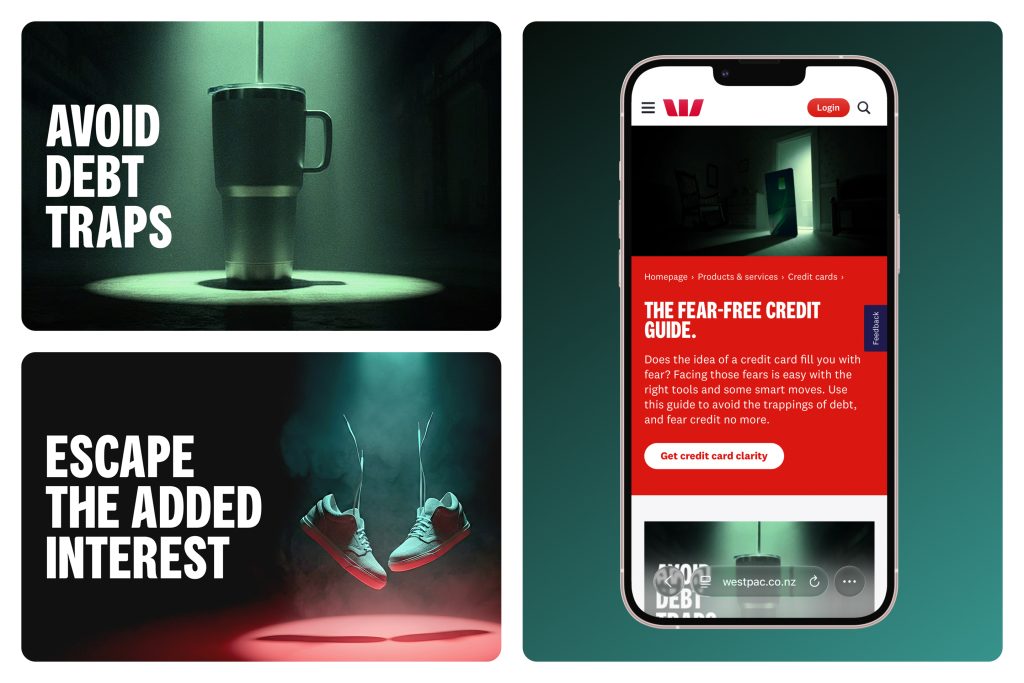
I’d love clients to understand that everything is connected. Even when we’re designing what might seem like an isolated moment or touchpoint, it’s never truly standalone. There are always experiences that come before it and others that follow.
That doesn’t mean we want to turn every brief into something overly complex, but we do want to consider the wider journey. We spend a lot of time thinking about how the moment we’re designing for fits into that broader experience, so it can play the most effective role for the customer and genuinely help them move through their journey.
What are your favourite tools in the studio?
We’re big fans of Figma and the collaborative way it allows us to design together. We do a lot of writing directly within Figma – designing words into interfaces so we can see how content comes to life visually and how it will be experienced by people in context.
Digitas is also part of Publicis Groupe, a global marketing communications company. What’s really exciting about this is having access to a wide range of powerful tools, including Creative OS, Buzz AI, Digitas AI, and a growing suite of well‑managed AI platforms. These tools help us work more efficiently, accelerate our process, and ultimately broaden our creativity.
What are your favourite types of projects to work on?
My favourite projects are always the ones where there’s something clearly in it for the customer. I think the hardest work comes when a business is trying to improve its bottom line in a way that doesn’t necessarily serve people. Even then, we’ll always look for a way to bring the customer back into the equation.
The projects I enjoy most are those with a clear customer problem to solve, rather than just a business problem – because customer problems are business problems. When we’re solving for a real customer need, we’re able to step into their world, think deeply about their experiences, and design meaningfully for that moment. That’s where the work becomes most engaging and impactful.
What project are you most proud of?
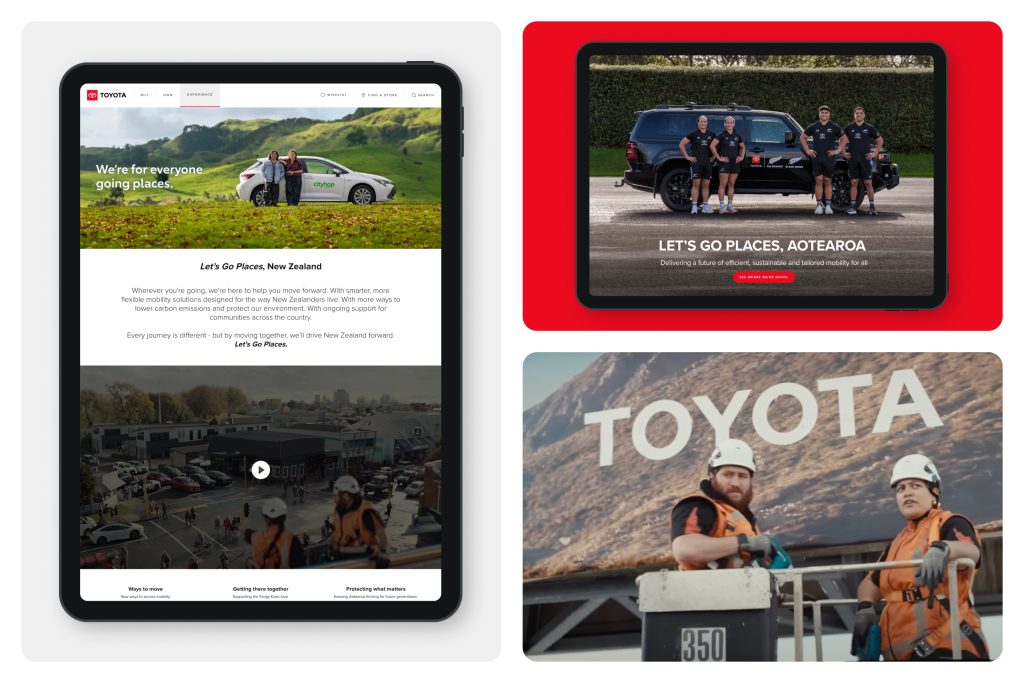
We’re really lucky to work with some major brands in New Zealand, one of which is Toyota New Zealand. I’m proud of a lot of the work we’ve done with them, but in particular how we’ve helped evolve their brand over several iterations.
Seeing Toyota’s purpose and platform, Let’s Go Places, come to life in a digital context has been especially rewarding – and even more so now that it’s become increasingly integrated into their product experience across digital channels. Watching that purpose translate into tangible, connected experiences is something I’m really proud of.
Do you have any advice about our industry for emerging designers or career changers?
With all the discussion around AI, it can sometimes feel hard to see a clear future in the industry. But I genuinely believe that passion is what will set people apart. Having a strong sense of purpose behind what you’re designing, and believing in the work you’re doing, gives you a real advantage over simply going through the motions or ‘colouring in the boxes.’
It’s not enough to be good at design, or even great at it. You need great ideas and the ability to bring those ideas to life. That’s where designers have a massive advantage – many people struggle to translate ideas into reality, and that’s your superpower. The more you lean into that, the stronger and more resilient your career will be.
Where do you draw inspiration from?
Being part of Publicis Groupe gives us access to a really connected network. We work closely with our colleagues at Saatchi & Saatchi, Spark Foundry, and MBM, and the work they’re doing is consistently inspiring. Beyond that, our global network offers access to case studies and award‑winning work from across the group, which provides a constant source of international inspiration.
Outside of that, inspiration often comes from simply paying attention to the world around you – a billboard you pass on the way to work, the latest email that lands in your inbox, or a digital experience you interact with every day. Sometimes you’re inspired just as much by the things you don’t like as the things you do. Understanding what you want to challenge, improve, or push back against can be a powerful source of creative inspiration.
What hobbies or interested do you have outside of work?
Honestly, very few – work keeps me pretty busy! But the one thing I’m most intentional about making time for is my family. I have two young kids, and whenever we can, you’ll find us outdoors, ideally at the beach and in the water.