In Motion With… Fraser Munro
In this series we’re shining a light on some of the people who breathe life and action into design, Aotearoa NZ’s motion designers.
This week we sat down with Fraser Munro, a freelance Animation Director.
Brought to you in collaboration with our friends at Motion Designers Guild of Aotearoa

What first drew you into animation? Was there a defining moment or influence that set you on this path?
My parents divorced in the early 80s when i was really young. So, with mum being at work and me being left to my own devices, rather a lot, I watched A LOT of cartoons. Square eyed, slack jawed. I didn’t know what it was back then, but there was something about those exaggerated and make believe worlds that just clicked with me and drew me in. There was nothing I loved more than cartoons. Didn’t really matter what kind, Disney, Hanna Barbera, UPA, 80s spacey stuff. I loved it all to the point I wore a groove in the couch.
Then after high school when I was pretty much doing nothing at all, a relative found an animation school and suggested I try that out. Freelance Art School was run by John Ewing at the time, one of the 2nd generation of Disney artists. And they taught the Disney style, pencils and paper. For some reason they had an intake half way through the first year, and that’s when I started training. It was the hardest thing I’ve ever tried, but it turns out I was exceptionally good at it. Aced the first year exams with 100%. And this was with half of the class having 6 months more experience than me.
In a weird twist, I was pulled over to the studio side of the school before the end of the course for work experience, so I never officially got all the course credits.
What does a typical day or week look like for you as a freelancer — or is every week totally different?
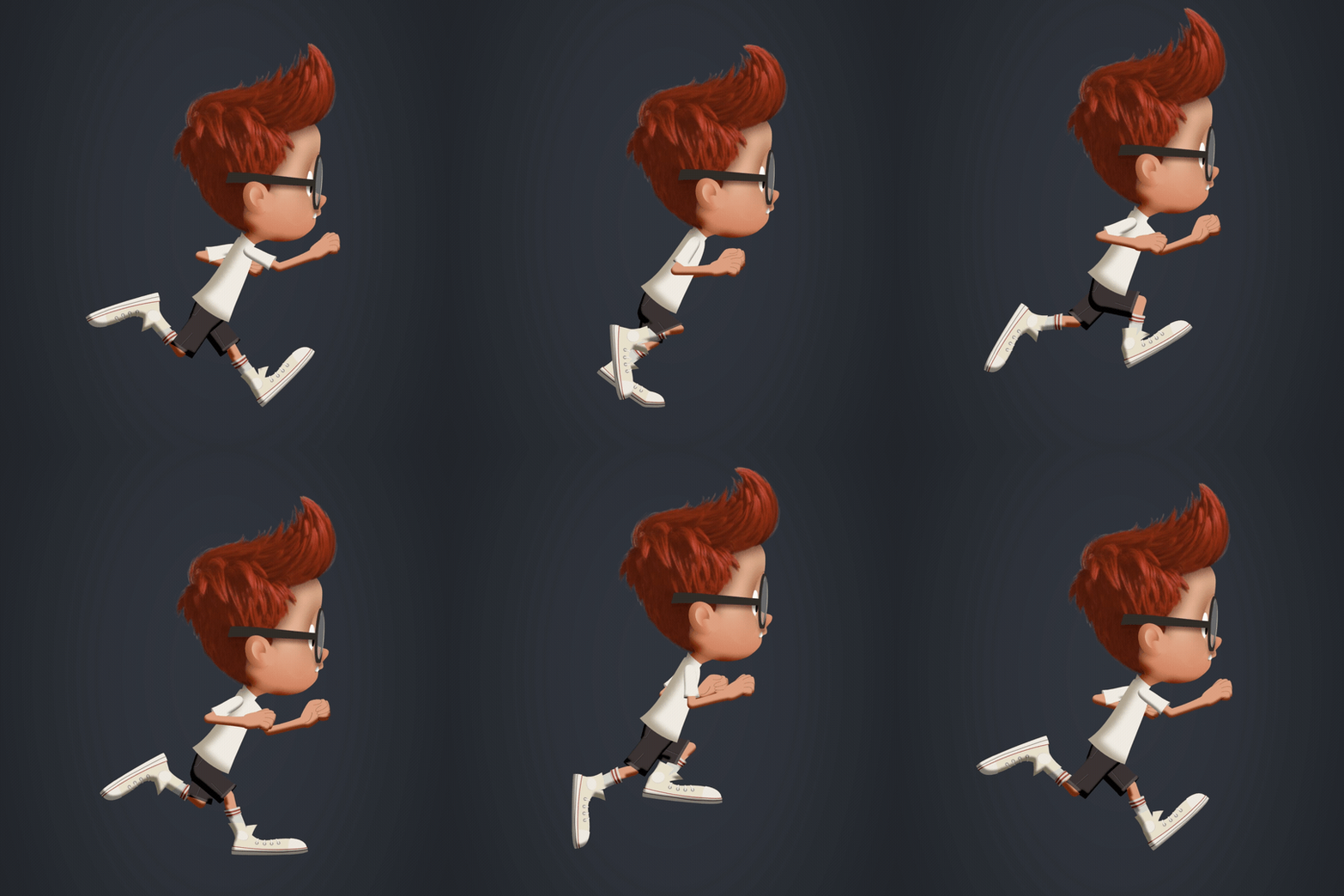
It depends on the type and scale of the project really. I do both short form commercial work and series projects. If I’m on short form work it’s a lot of marketing outreach in the morning, then a juggle of project management, research, designing and collaborating with clients, setting up project files and rigs, finding sub contractors, animating, compositing. The whole nine yards. Everything is very fluid, flexible and fast paced with a lot of different tasks that change day to day.
But if it’s a series project there’s a different energy. You’re in a big team and operating on a longer time frame with different priorities. It’s more about getting to know the characters and story, then really drilling down into good emotive performances that gives the director what they need to see their vision come to life and for the whole team to be working efficiently, week by week, over many months. So those weeks are very much a day by day repeat of checking in with the team each morning. Cranking out footage. Addressing feedback. Steady, solid focused effort on a single project with less distractions.
Though I am lucky these days as I’ve been able to bring my wife Alannagh on board 2 days a week to take over a lot of the database and records management, market research and production assistant work. Luckily we have enough room for an office each at home.
What’s the stuff you like creating the most?
My favourite? Again, it’s two fold. (I like a good paradox). I’m quite mercurial and like to change pace and focus occasionally.
So I love rigging and animating characters for series projects. It really is my first love and reason I got into this. The mix of technical problem solving and artistic skill and practice in a team setting, that goes into creating stories that people love, puts a huge smile on my face. You solve problems together and you all get to share in each other’s amazing efforts.
But at the same time I love being able to take hold of a project at its genesis and steer the whole thing from concepting and design through to production, pulling in extra team members and managing the project then delivering. Being able to drive the whole thing and have clients express just how happy they are with the outcome and experience is blimmin awesome.
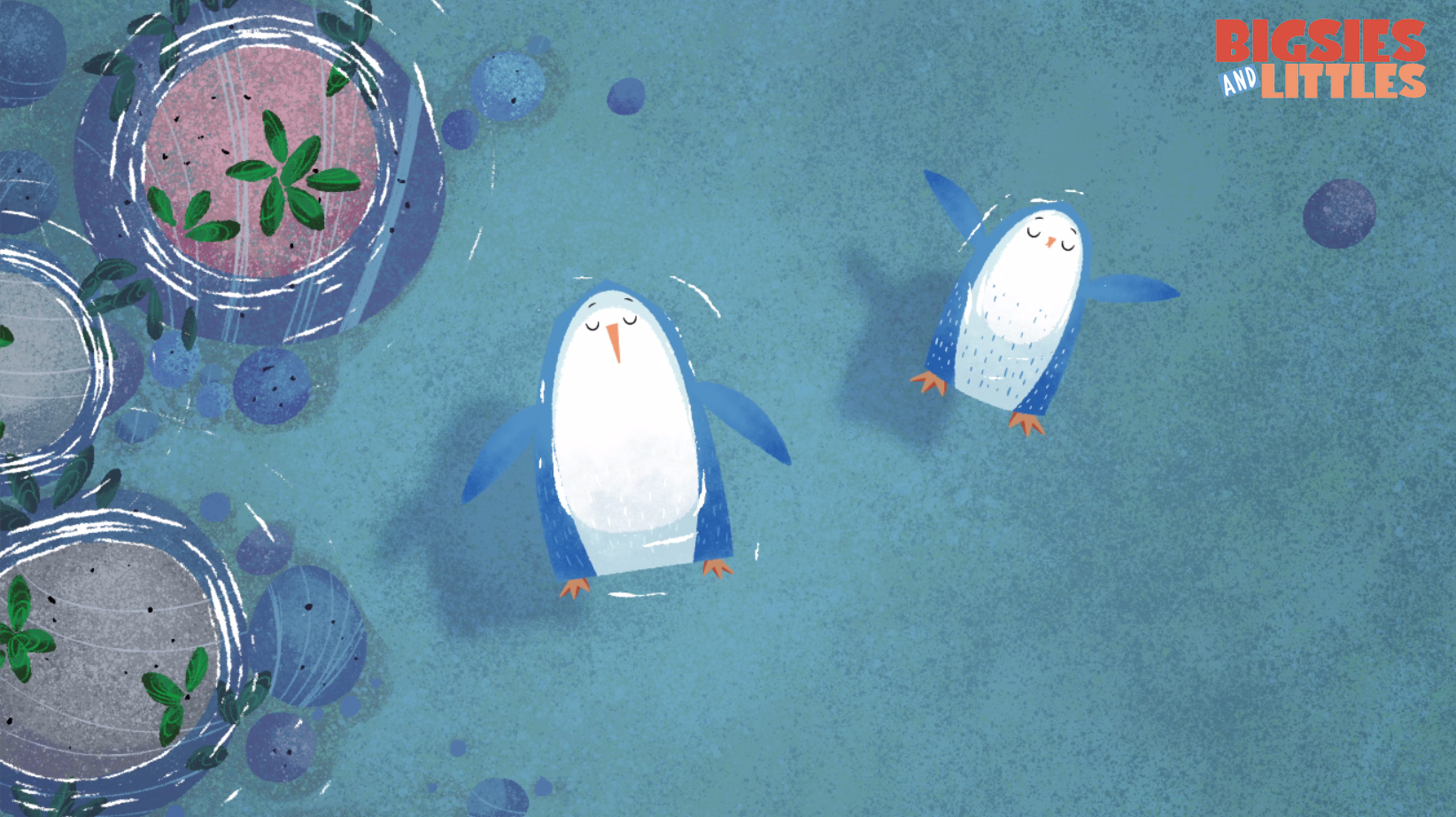
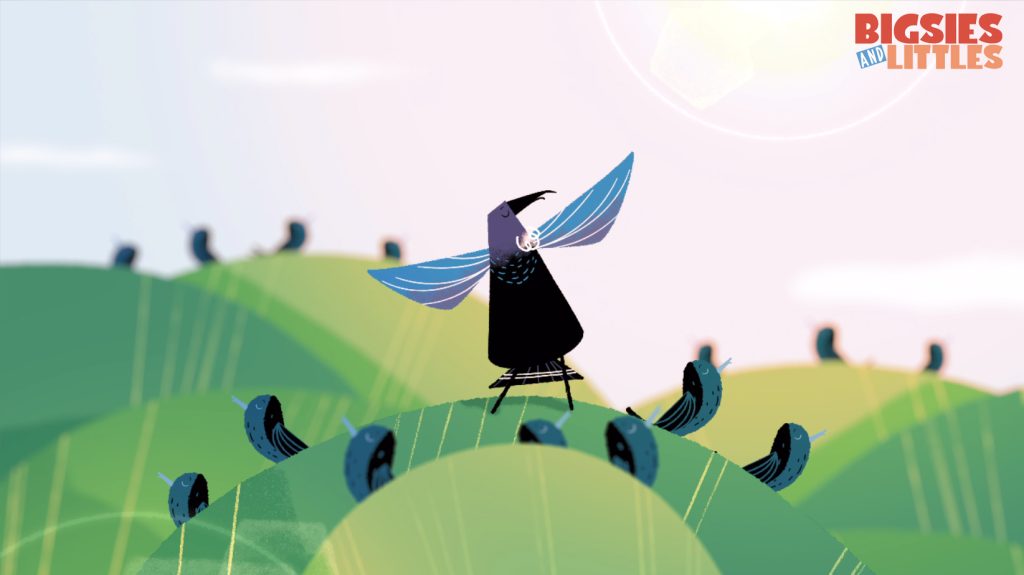
You recently finished work on Bigsies and Littles, a children’s animation series now on RNZ, what was your role on the production?
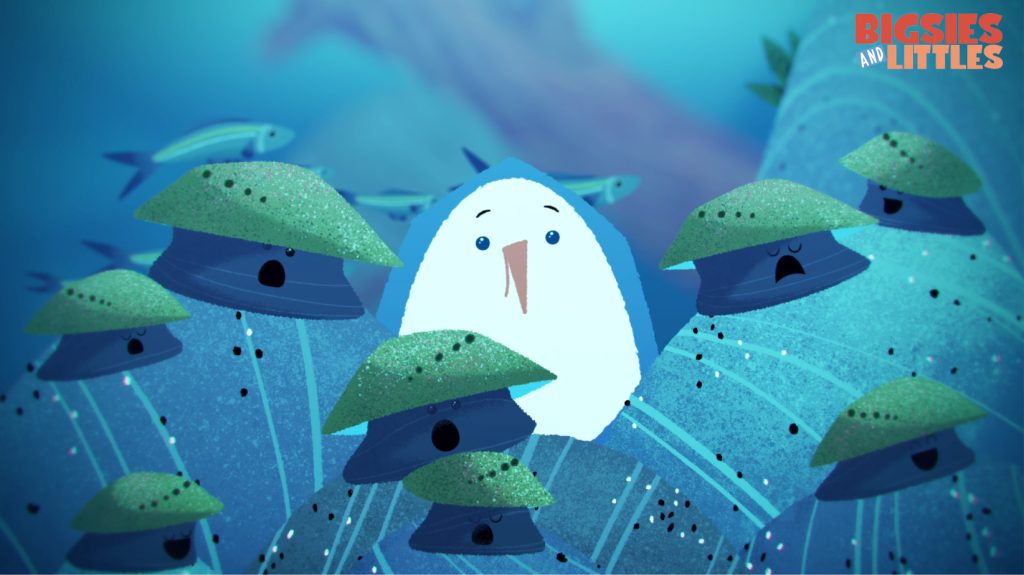
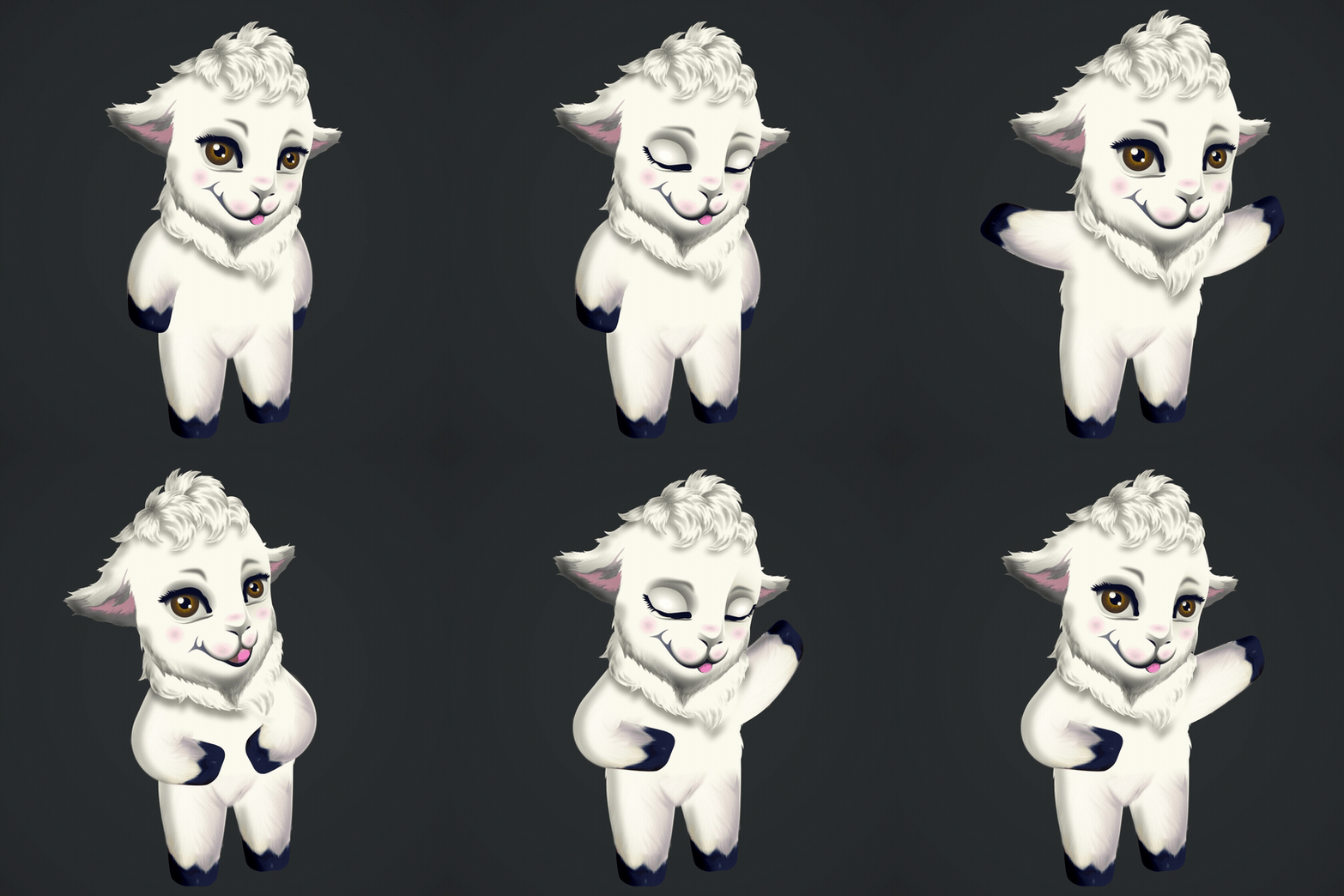
Yeah this was something special for me. Myself and Raymond McGrath have worked together for many years back at Flux Animation, and I have a lot of respect for his level of skill both technically and creatively. So right off the bat I knew the project was going to look great and be directed really well. Not to mention we managed to get some of our ex colleagues onto the project. Half the team had all worked in the same studio for some time before, so it was a little like “Getting the band back together”. My role in all of this was first to do a bunch of RnD on how to actually rig the characters. Help build the Toon Boom Harmony side of the pipeline for a remote team. Lead the rigging phase. Then be one of the 3 lead animators tasked with pumping out a solid 7 minute performance, including singing and dancing, every 2-3 weeks – for 8 months
Were there any unique challenges to working on this kind of production?
There were 2 key challenges for me on Bigsies and Littles.
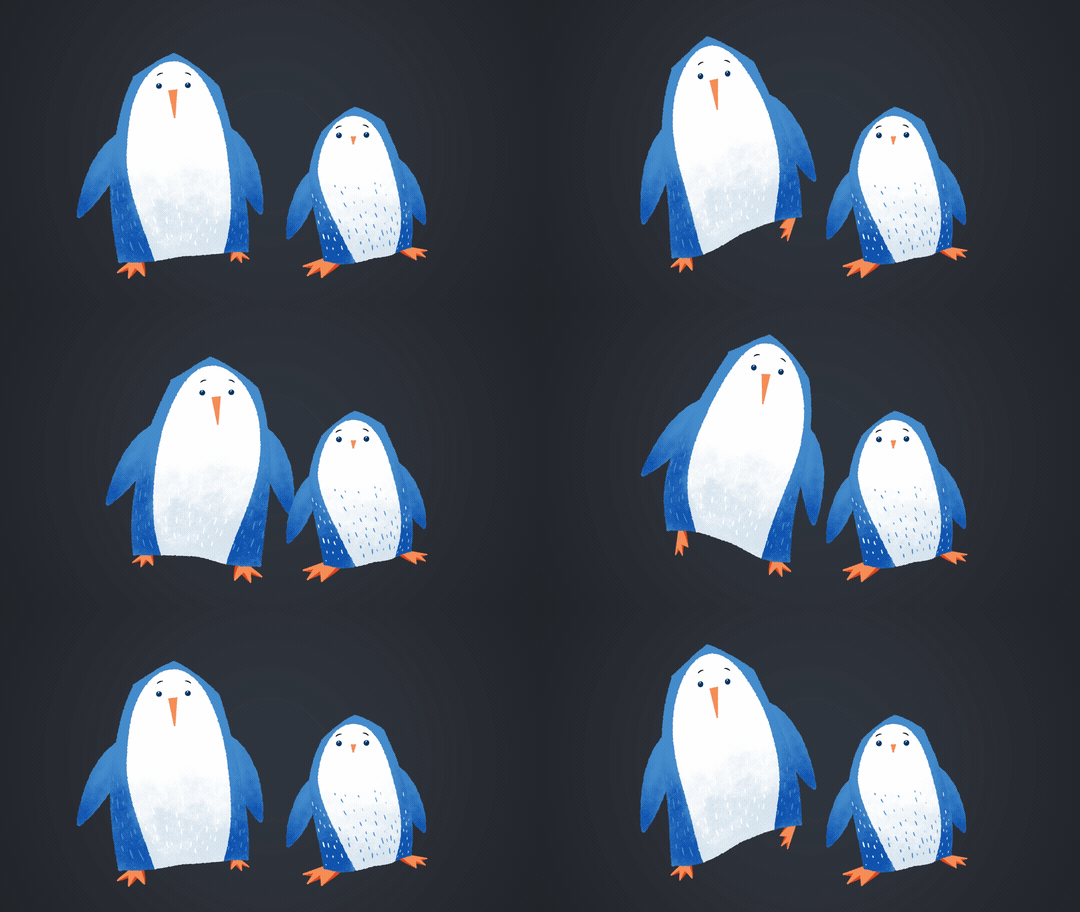
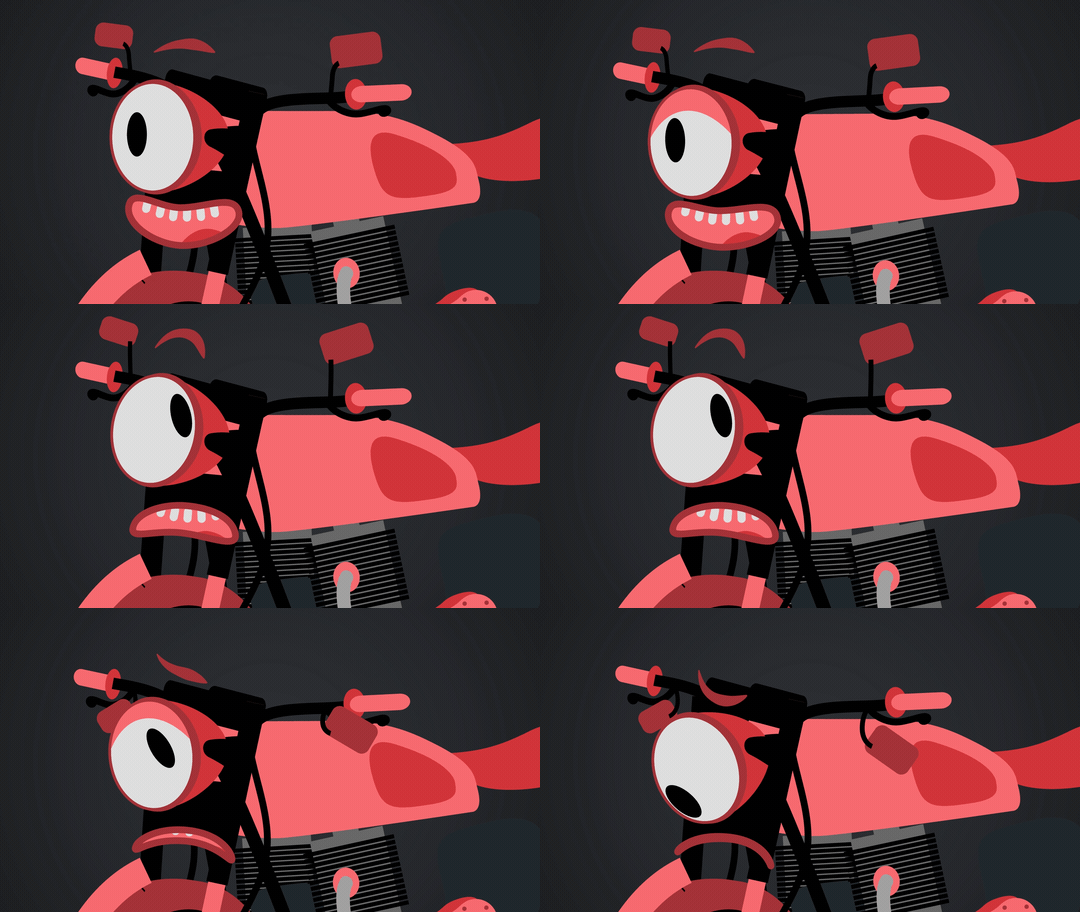
The first was getting a technical framework for the rigs that enabled a good character performance, on an aesthetic that didn’t want to play nice with the software. Firstly, the 2 main characters don’t really have limbs, or any sort of body structure. They’re just big jelly bean shapes. So how do you make a functional rig that needs some sort of anatomy in order for them to be posed and animated? Secondly, the textured picture book quality of the designs did not allow for the traditional methods of moving the character through different angles within the same rig set up. So with some of the newer rigging tools in Toon Boom I hit upon an ingenious dynamic switching system that allowed us animators to switch from one character angle to another, while still using the same set of on screen UI manipulators.
The second big challenge was figuring out how to set up effective asset and scene management from rigging > animation > compositing when we didn’t have a large, centralised team. Toon Boom, especially for series work, generates a lot of data. The folders can get very dense, very quickly. And as you progress through episodes, key characters are constantly getting little fixes and updates, new characters are being rigged and brought into the production and props are getting built as they come into use in an episode. So you need to have a way to update animators without the central Toon Boom server that would be present for a much bigger team. Then once scenes are animated they need to be reviewed by the director and finally sent through to compositing. Thankfully the two compositors and FX artists were in the same building, so we had a server once things got to them for final rendering of shots to go into comp.
Are there any tools or workflows you swear by to keep remote projects moving smoothly?
Well, I run my business from Foxton Beach. So every project is a remote project.
There’s 1 key area I find needs to be in place for things to go smoothly, whether that’s a one man job or a team project. Good clean communication.
For team based projects a platform like slack where you can have quick and easy text conversations one on one, or open to the whole team, with the ability to switch to video calling within the same app is vital. If it’s just me handling the whole project for a client I like to operate on an “Every day you will hear from me” basis. So every day I like to give my clients a quick mini WIP and status update. The more they hear from me, the less they wonder what’s happening, the less they have to stop and ask me questions. This leads to a vastly better experience for the client where they feel like they are in the loop at all times and there’s no surprises.
And I’m a big fan of good ol ‘pencil and paper. Every project starts on paper. Quick initial sketches through to story boards. Once I’ve got the final coloured designs, proposal, budgets docs and schedule calendar sorted, I switch back to a note pad and pencil for day to day operations and sketching further out ideas. It’s low fi, but it’s quick. And you never need to learn how to use a new tool. Basically, If I don’t need to send it to a client, it tends to be sorted in an old school way.

How do you choose what to say yes to and what to walk away from?
There’s always a pro and con to every project, but there are red flags. Usually those are more about how a prospective client talks and behaves, more than what the project involves. It’s generally just a gut feel. But a gut feel that’s based on many years in the industry and seeing a fair few things go south for one reason or another
What’s been one of the hardest lessons to learn in your creative career so far?
Feedback isn’t personal. Creativity is partly an ego business. You have to put some of your ego into making something you’re proud of. But the feedback isn’t an attack on that. It’s just another person, doing their job. Usually with someone above them putting pressure on to achieve certain outcomes or meet a certain brief..
What would be the key piece of wisdom you wish you could impart on a young Fraser starting this journey?
Draw as often as possible! It’s the practiced hand eye co-ordination that leads to good solid drawing. And a good foundation in drawing skills always leads to better creative results, no matter the style of software
Is there a piece of client feedback you’ve received that has made you question the future of the human race? How did you go about navigating your response?
I have some hairy moments for sure. The odd one where it felt like it would turn to fisticuffs. But question the future of the human race? I’m gonna leave that to… (waves hand at generally everything).
Bigsies & Littles is available to view on RNZ here: Bigsies & Littles
Find Fraser on Instagram – https://www.instagram.com/fraser.mu.art/