What’s top of mind for designers right now; and what are their visions for the future?
These were two questions we posed going into the annual 2024 DA Spring Conversations. Our goal was to bring designers together to share their perspectives, hopes and fears. We also wanted to understand how Design Assembly could help them with their challenges and aspirations.
As convenor for the Wellington event it was exciting to reconnect with the design community. As a designer, it’s always daunting to craft an experience for other creatives. It’s also fear-inducing to facilitate fellow facilitators. But we had a great DA team of collaborators pulling different elements together, so we were in safe hands!
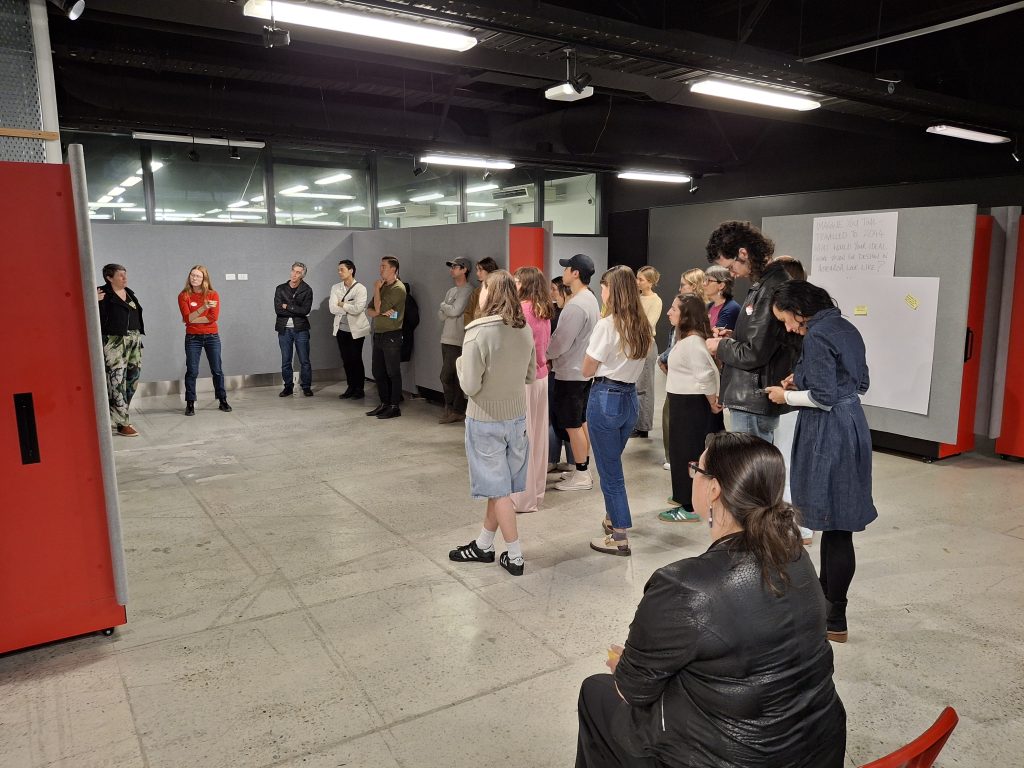
After initially welcoming around 30 participants we were lucky to experience an inspiring collection of presentations. These traversed AI and craft, spiritual storytelling and the celebration of culturally significant objects and places.
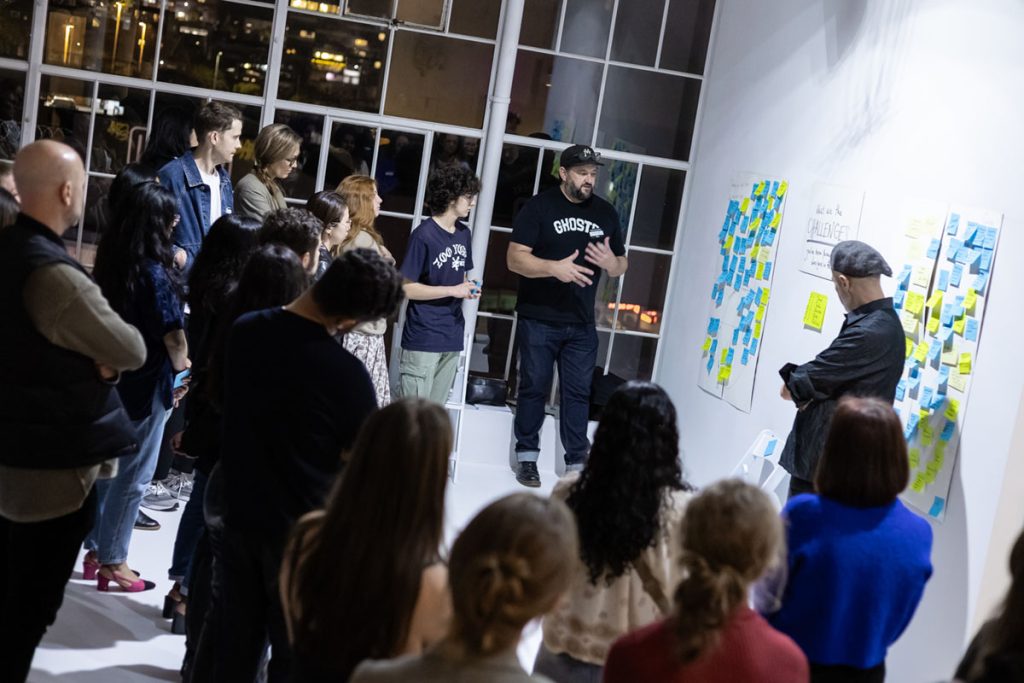
There’s nothing quite like corralling a group of creative minds into focussed activities, but we took on the challenge. We ran the event in three venues on consecutive days, across Wellington, Auckland and Christchurch. At each event we split into groups to answer three questions:
- What challenges are you currently facing;
- What new ideas are you seeing emerging; and,
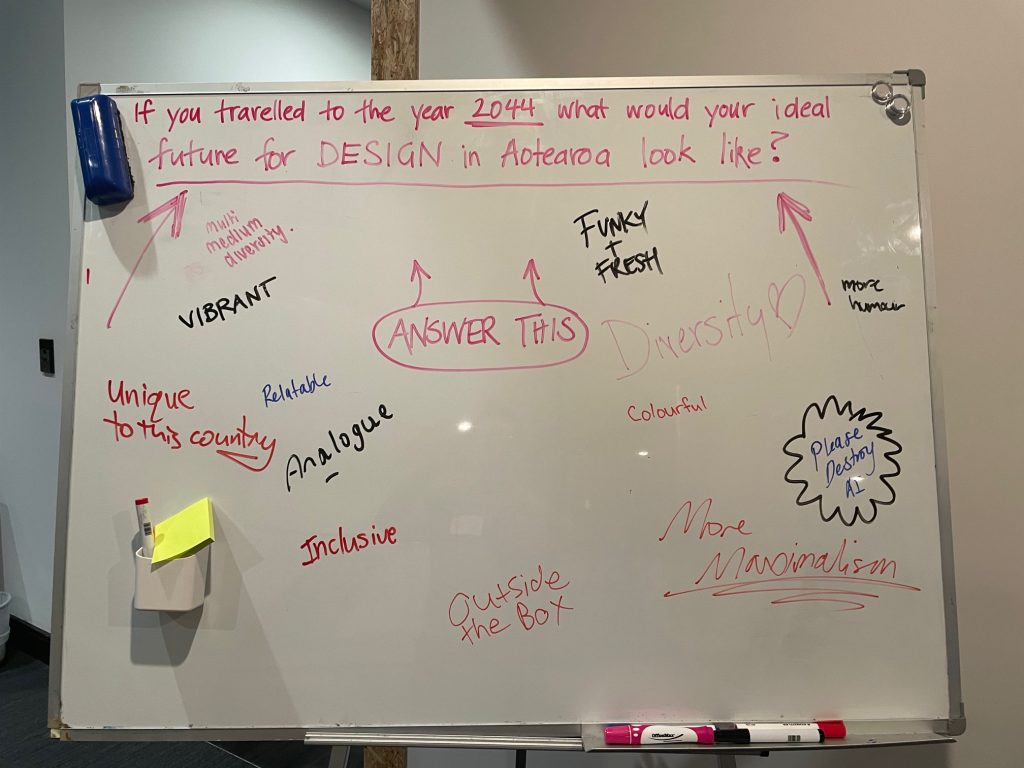
- What is your preferred future vision for design in Aotearoa?
Groups rotated around stations to provide their answers, prompted by facilitators who kindly volunteered their expertise There was a great buzz amongst participants and from overall feedback everyone enjoyed the change of pace and interactive format.
Post-event, we collaboratively analysed the data, synthesising it into questions and insights to help us understand the differing perspectives and needs of designers across the motū (islands).
There were different flavours that emerged across each venue. As expected, there were also common themes occupying the minds of designers. Themes about present experience and an unknowable future.
A shared theme was about uncertainty in the job market. This was felt more acutely in Wellington, where government cuts have affected both external budgets as well as internal design teams. The demand for design work has seen a significant reduction in the past 18 months. Combining this with an abundance of tech redundancies means that any job advertisement is massively over subscribed, while domestic applicants face stiff international competition.
With a notoriously small design sector across Aotearoa there were questions about how this situation might play out through 2025 and beyond. It also revealed opportunities for designers to collaborate in different ways and drive new modes of community engagement or pursue smaller business niches through online channels.
Another common theme was the ownership of the narrative of the value of design. There is a perceived need for design to move up the value chain into more strategic or socially impactful projects. For those in UX or service design this is a familiar place to operate – although many may identify the same struggle. Now, designers in more creative or craft-based practices are also seeing the value of applying creativity in diverse ways – beyond what they generally regard as their happy place.
These ideas are being pushed by an increased democratisation of design tools that are widely available to a more design-savvy public. There was the observation that although design tools, such as Canva, enable clients and the public-at-large to indulge their creativity, this can also impact the work of smaller studios or reduce the quality of design outputs.
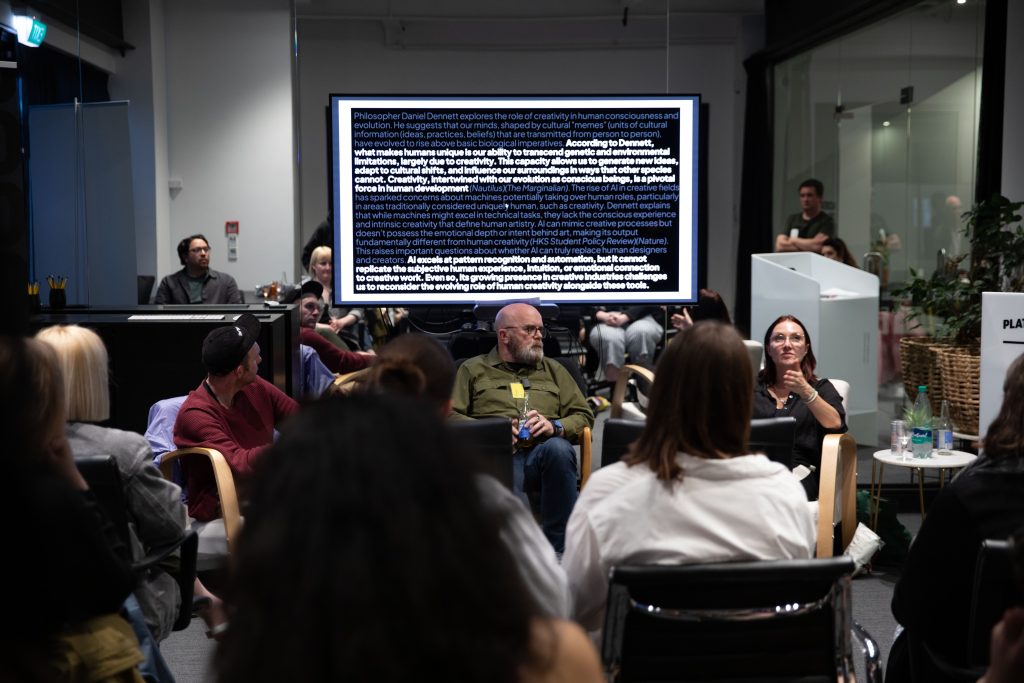
Technology plays a pivotal role in design and if Artificial Intelligence (AI) wasn’t a theme across venues I would have fallen off my chair. It’s a topic we constantly face on social media. One that has already impacted independent creatives and larger design studios. Core challenges our participants pointed to were the cannibalisation of creative work through generative AI tools, alongside rapid cycles of upskilling and technological engagement required to remain relevant.
Although these read as quite pessimistic themes, they resonate with what seems like a generally challenging period for many. There’s a reason why we kept hearing the catchphrase “Survive ‘till ‘25”. Something many are still trying to do as they hold their breath for relief well into the year.
Yet reasons for hope and optimism shone through our conversations.
Although it’s an ongoing journey with recent knockbacks, the drive for a more inclusive and equitable design industry was a theme across the board. Participants also identified an increasing number of Māori and Pacific designers not only being more visible and valued, but actively shaping the direction of design in Aotearoa.
An inspiring hikoi (walk or march as a protest) followed our spring conversations, which communicated the meaning of kotahitanga (unity, togetherness, and solidarity) to all corners of New Zealand and around the world. This illuminated the potential for a different, yet plausible future for design in Aotearoa. One that values every designer’s contribution, is socially and environmentally responsible and acts as a beacon for unity, equity and inclusion across the sector and beyond.
A future for which we should use all our power to realise.


