Under the Hood with Chloē Reweti
Ahead of our upcoming online Under the Hood: Māori Design on 25 June, we sat down with one of our featured speakers, Chloē Reweti. Register for your ticket to attend the webinar here.
He uri tēnei nō Ngāi te Rangi, Ngāti Ranginui, Ngāti Tukorehe rātou ko Ngāti Porou,
Ko Chloē Reweti ahau,
Tēnā koutou katoa.
Can you share a little about the path you took to get to where you’re at now as an art director and graphic designer?
I studied design at Whitireia Polytech, and later returned to earn a Bachelor of Arts degree, majoring in printmaking and drawing. During my studies, I got a part-time position as a junior designer at a small, local studio and worked there for a number of years.
Studying art taught me how to craft compelling stories through visuals – lessons that far surpass those I gained from graphic design. Art school is undoubtedly hard; it demands a deeply personal engagement with the work. Every artist inevitably reflects themselves in their art, which involves a level of vulnerability and sensitivity that can be confronting. I tend to do that in my design work too; it’s someone else’s vision, but through my lens. Art is about creating your own unique vision, while design involves shaping someone else’s. Occasionally, these two intersect; that’s the sweet spot I seek. For me, this intersection is exemplified in Māori design.
My professional journey continued at Te Papa Tongarewa and then at Wētā Workshop. The Workshop is the reason I was able to make the jump to being self-employed, the creative rigor, discipline, opportunity and support there really propelled me forward. It’s funny to say I had my dream job twice, but it’s true. When I left, it was because I wanted to try and build something different, which my Employer (and Creative Director) understood. He gave me my first contract at my exit interview and allowed me to keep my work equipment until those projects wrapped up which helped my transition. Both the Workshop and Te Papa have continued to support me since leaving in different ways. They share my work and hire me back from time to time. One former colleague showed me how to manage my time and rates, one helps me with strategy when I need it, another from legal counsel helped me to protect my I.P, another helps when I need cultural expertise and a lot of my referrals come from ex-colleagues. I also had a mentor at the Workshop, who to this day, continues to mentor me for free – all in their own time. Without a doubt, I wouldn’t be here without their investment in my success, e kore e mutu ngā mihi ki a rātou. I now work as an independent designer in Wellington, concentrating on kaupapa Māori-driven projects.
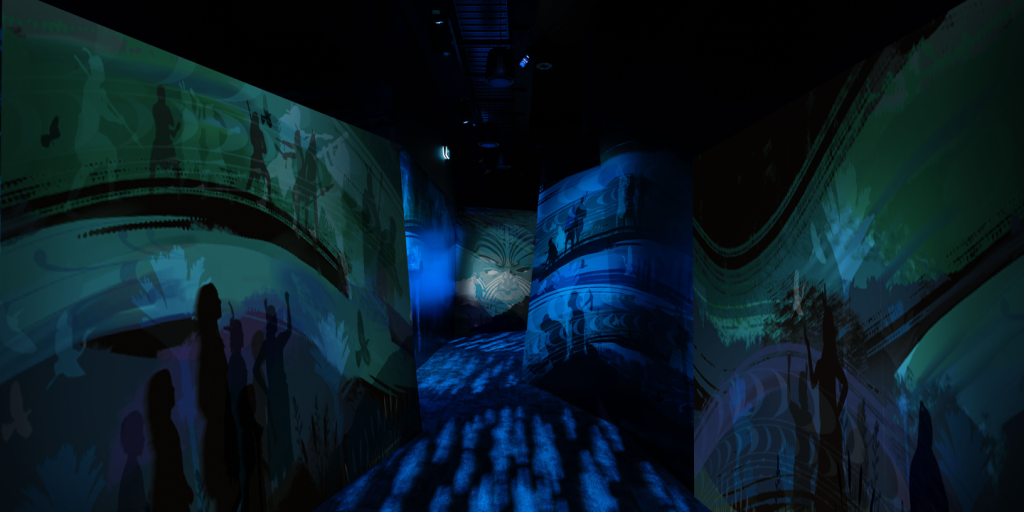
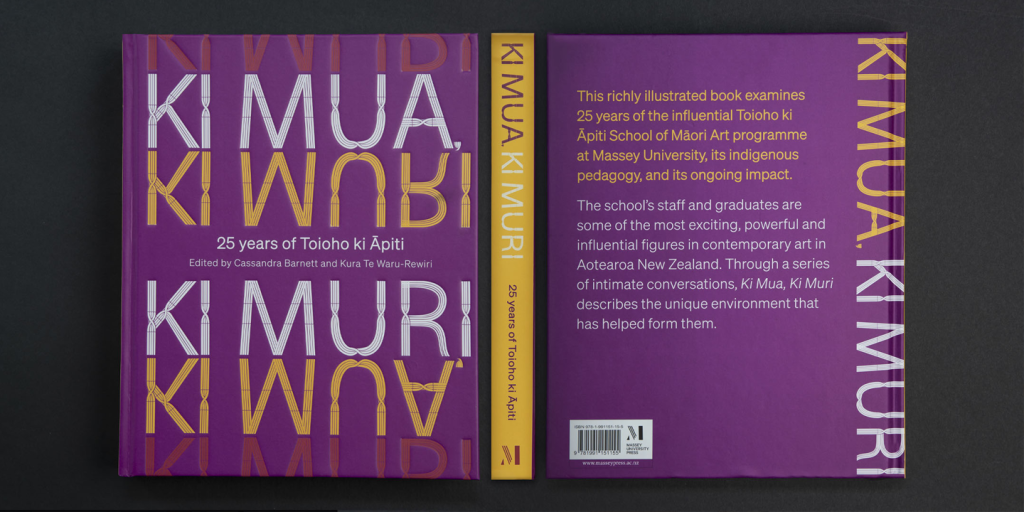
What project will you be presenting at Under the Hood?
Last year, I was engaged by MahiTahi, a full-service Māori agency, to create illustrations for the Samsung Galaxy Z Flip6. I will walk through my approach and concepts, highlighting some of the ways in which toi Māori and Māori design differ from conventional design methodologies. I will share my experience with imposter syndrome and self doubt, as well as some of the strategies that continue to help me navigate those feelings.
What was the most challenging part of the project and what lessons did you draw from it?
Imposter syndrome is a wild ride! Samsung offered a big opportunity for me, and with that self doubt kicked in because it felt like the stakes were high. While I believe I’m skilled at what I do, I often compare myself, particularly to artists whose work I admire, which then triggers feelings of anxiety about whether I’ll produce something of value. The silver lining of this anxiety is that it motivates me to work diligently and stay focused; however, its downside is that it can sometimes be paralysing or cause self doubt. I plan to share more details about the methods that my mentor has helped me to cultivate – that assist me in managing these feelings. While it’s not a cure, these practices certainly help me navigate imposter syndrome more effectively.
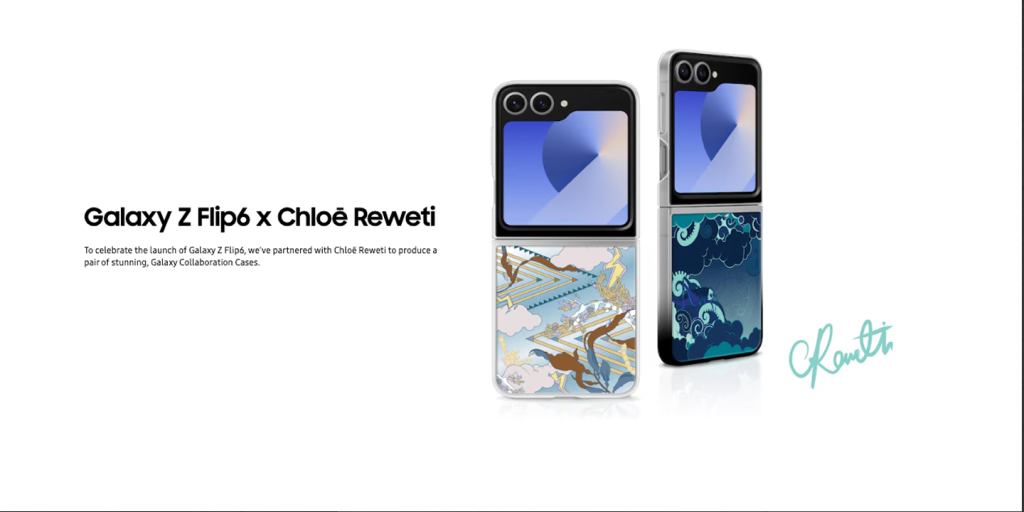
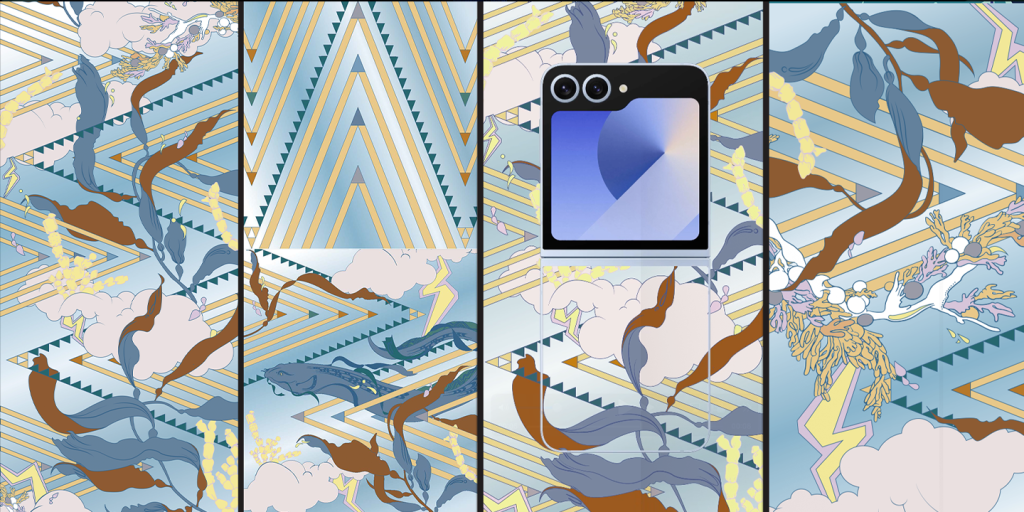
Was there an ‘Aha!’ moment in the project when things clicked and fell into place?
I’m not sure if I experienced that exact feeling, but when I enter a ‘flow state,’ it feels as if all distractions and background noise fade away, and I lose track of time. I hyper-focus without fixating, working swiftly, intuitively, and with confidence. In this state, everything aligns harmoniously both aesthetically and conceptually. I strive to reach this level of flow in my design work and continue to practice small rituals to help me achieve it.
Now that the project has finished, what are you working on?
My mahi is varied, I’ve currently have a book cover, a sexual health campaign, symposium graphics and some surface patterns in the pipeline. Although the current New Zealand government has been, in my view, destructive for Māori, it has actually created more opportunities for me. In response, my clients are amplifying their efforts to uplift Māori voices and perspectives. They are actively exercising their values publicly and strategically aligning their promotional initiatives to celebrate te ao Māori. Activism can be as simple, yet powerful as exercising your values.
What insights to your methodological approach or philosophy can you give us?
Because my work is rooted in my culture, I incorporate an additional layer of reflection to ensure that the work and mātauranga are protected. I apply value-based thinking to information I receive to determine whether I am the right fit for a particular client and project. These are questions like:
- How does this project or organisation support indigenous peoples?
- How does it celebrate or centre our worldview?
- Whose voices are being amplified, and why?
- Is this potential client committed to educating themselves and their audience about our history, truths, and narratives?
- And finally, an overall vibe-check – does this initiative feel genuine?
If I find that I can’t confidently answer these questions, I will seek advice or choose not to proceed. This process helps me ensure that my work aligns with my values and respects the integrity of my culture.
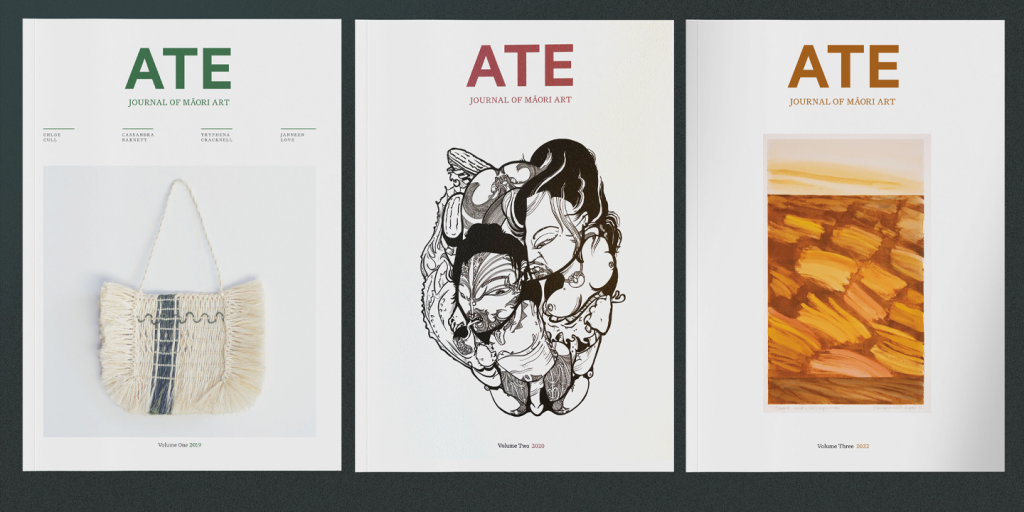
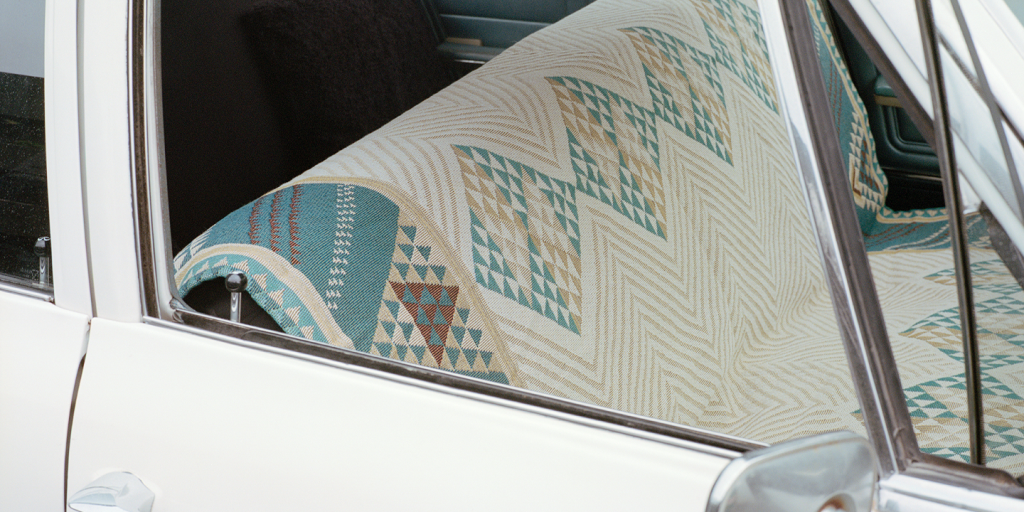
Outside of work hours what creative projects and/or hobbies are you involved with?
Because my job is quite sedentary, I enjoy physical activities; the gym, learning to grow kai, and being in nature. I also love art and going to exhibitions which in-turn informs my work. My recent favs have been Vivienne Westwood and Jewellery at Te Papa and Rutu, Rongo and Rita by Ron Te Kawa at Enjoy Gallery – I am a big fan of maximalism which is reflected in their work.
And finally, where to next for you? What areas of your work or personal development are you hoping to explore further? And, where can people connect with your work?
I used to think that being self-employed meant working less and getting paid more…bahahahaha. I work more now than when I was employed, and if I’m not in the studio, I’m thinking about how to solve a work problem or looking for inspiration or talking to people about work. I realise that work-life balance is entirely my responsibility, and I’m actively trying to rework my approach to mahi, to maintain a sustainable practice you need to be a sustainable person – I’m still learning that.
Aside from that, I see myself as a lifelong learner when it comes to my culture, there’s an endless puna of mātauranga waiting to be uncovered. The great thing about my practice is that it’s a field where I can continuously learn about myself and people, and keep building my foundations.
Website: Chloereweti.com, IG: chloereweti.mahi
Register here to attend Under the Hood Design & Te Ao Māori on 25 June
About Chloē:
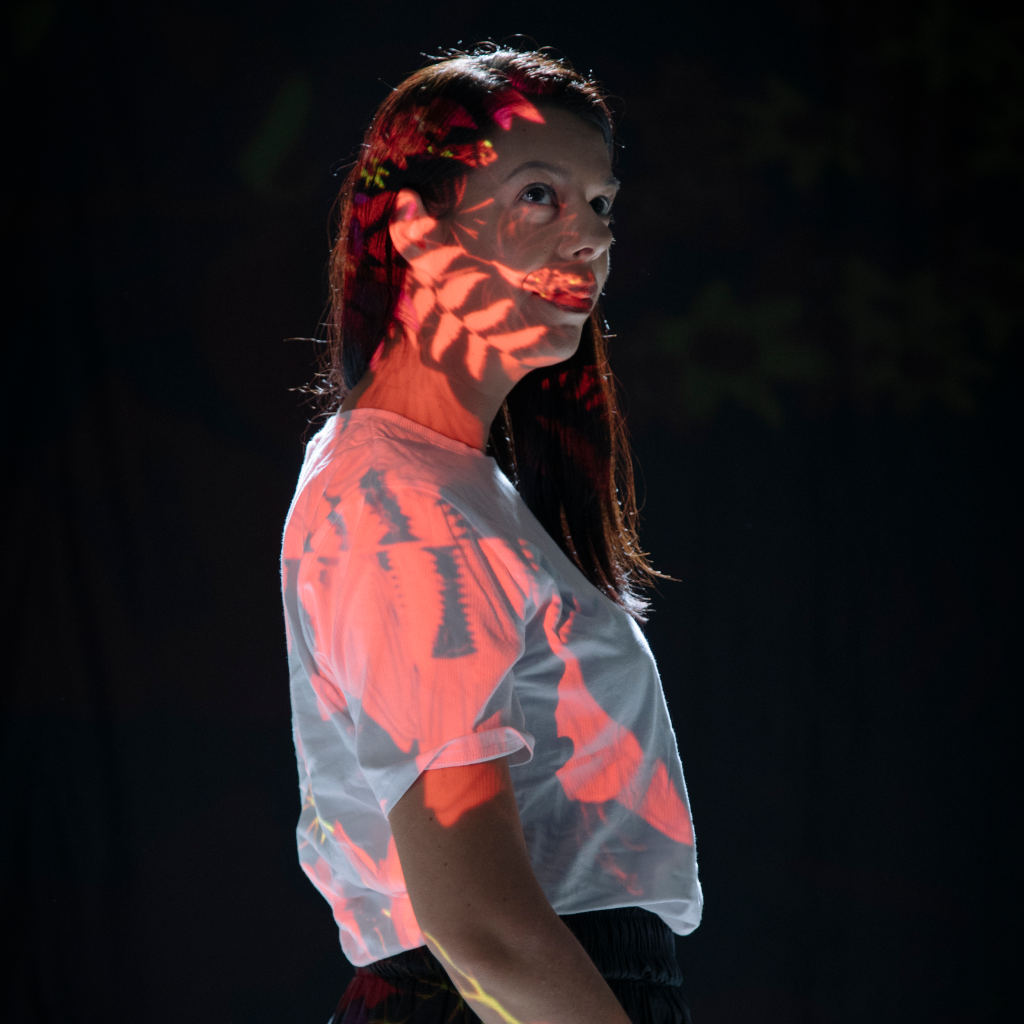
Chloē Reweti (Ngāi Te Rangi, Ngāti Ranginui, Ngāti Tukorehe, Ngāti Porou) is an independent graphic designer in Te Whanganui-a-Tara Wellington. Chloē has previously held creative roles as a graphic designer for The National Museum of New Zealand Te Papa Tongarewa, and Art Director of graphic design at Wētā Workshop.
Chloe’s practice is informed by mātauranga Māori and toi Māori. Her work is robustly researched through conventional mediums like publications, as well as through intimate interactions with artists and makers. When in wānanga with these practitioners, she learns about the intricacies of their work to bring integrity and cohesiveness to her design.