Women in Design . . . Dr Sarah Baker
In the lead up to Women in Design Day 2025: Moments of Change—an annual event dedicated to fostering community, celebration, and education among women in the design industry in Aotearoa New Zealand—we’ll be releasing interviews with each of our workshop facilitators to give you a sense of their career journeys and the types of workshops we’ll be diving into at the live event.
Today we are chatting with Associate Professor Dr Sarah Baker, a design strategist, researcher, and educator at Media Design School in Auckland. At Women in Design Day, Sarah will be facilitating a Gender & Design workshop that will explore gender inequality in design and offer practical strategies for designers to make a change. (full details below the article).
Who/what were your early creative influences?
I come from a family of people who always had craft projects on the go so I think that influenced me from an early age. As a teenager I had a really strong interest in retro fashion and I started collecting mid-century ceramics. Growing up near Brighton in the UK also meant that I was heavily influenced by subcultural style and club fashion, something that really stays with me today (I’m in my element on the dance floor!).
What inspires you creatively now?
The things that inspire me are usually outside of the ‘design canon’ or what is considered ‘good taste’. I like the vernacular, the handmade and the glitch. Recently I’ve gotten really interested in the work of the Institute for Queer Ecology and the Institute for Postnatural Studies. I also can’t seem to get enough of Dinamo Typefaces and love that they offer educator and student font packs.
Can you describe your career path?
It’s quite a long story…. I went to London College of Printing to study advertising and then when I graduated I got a job in a design studio on account side of things. I hated it! Luckily I’d been working in the summer with international students and the language school rang me and asked me if I wanted to teach English in China, so off I went. That’s when I realised that I loved teaching.
When I came back to the UK I got a job in marketing and design at the Hayward Gallery on the South Bank. One of my tasks was working with artists, designers and programmers to create ‘mini-websites’ about each exhibition, which as so much fun. At the same time though, I wanted to think more deeply about what we were creating and that’s why I went to do my MA and PhD at the University of East London. Eventually my academic career bought me to Aotearoa.
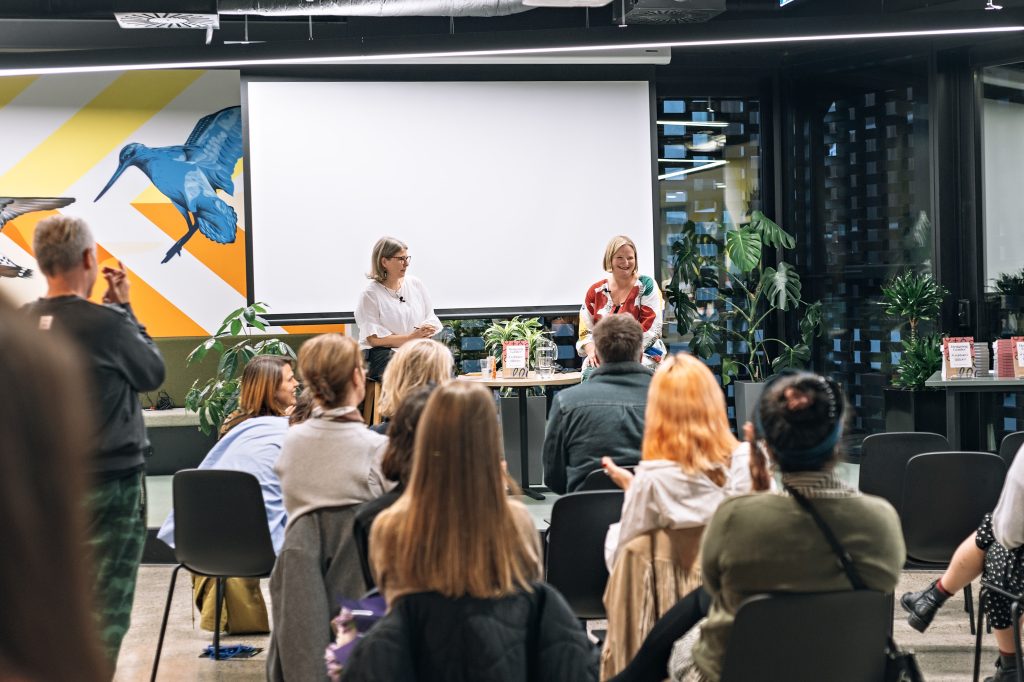
What does your typical workday look like?
My workdays are varied and I love that about my job. Usually they involve supervising some Master of Design student projects, a meeting or two about research at the school, some writing or research. This year I’m trying to do something afk each day, ideally something creative or collaborative.
Do you have a project, made memorable because it challenged you? What did you learn from that work?
One of the most challenging projects in my career so far was writing my book ‘Designing Gender’. It was lockdown, my kids were really small and I broke my ankle badly while I was writing it, so it was challenging for me. The scope of the work, which is pretty large, also made it a huge task. I think I learnt to be kinder to myself through the process.
How do you foster innovation in your work?
I try to be really observant of the world around me – I think you can find inspiration and innovation in the strangest places.
What do you think career/creative success looks like?
I have a relatively modest idea of success – I would like to positively influence people’s experience of the world in a small way, and make a bit of a change in terms of social justice if I can.
What’s the best piece of advice you’ve received?
That it’s ok to say ‘no’ sometimes.
And the worst?
Not really advice but there can be a culture of individualism and competition in academia that is easy to get sucked into. I am very resistant to that.
What barriers have you seen in the design industry throughout your career? How have they affected your work?
For me one of the challenges has been getting design research and creative practice research recognised as an important endeavour. Historically, scientific approaches have been given higher value and associated with masculinity. So for example, when I was studying for my PhD an older white male sociologist said to me that my topic choice ‘seemed fun, a bit like my personality!’ I mean I hope I do come across as fun but that doesn’t mean my work isn’t important.
What do you hope for the future of design in Aotearoa New Zealand?
When I moved to Aotearoa from the UK I was surprised to see many of the same design examples held up as good design. This has changed somewhat, but I hope increasingly more value is given to the uniqueness of design and creativity in Aotearoa.
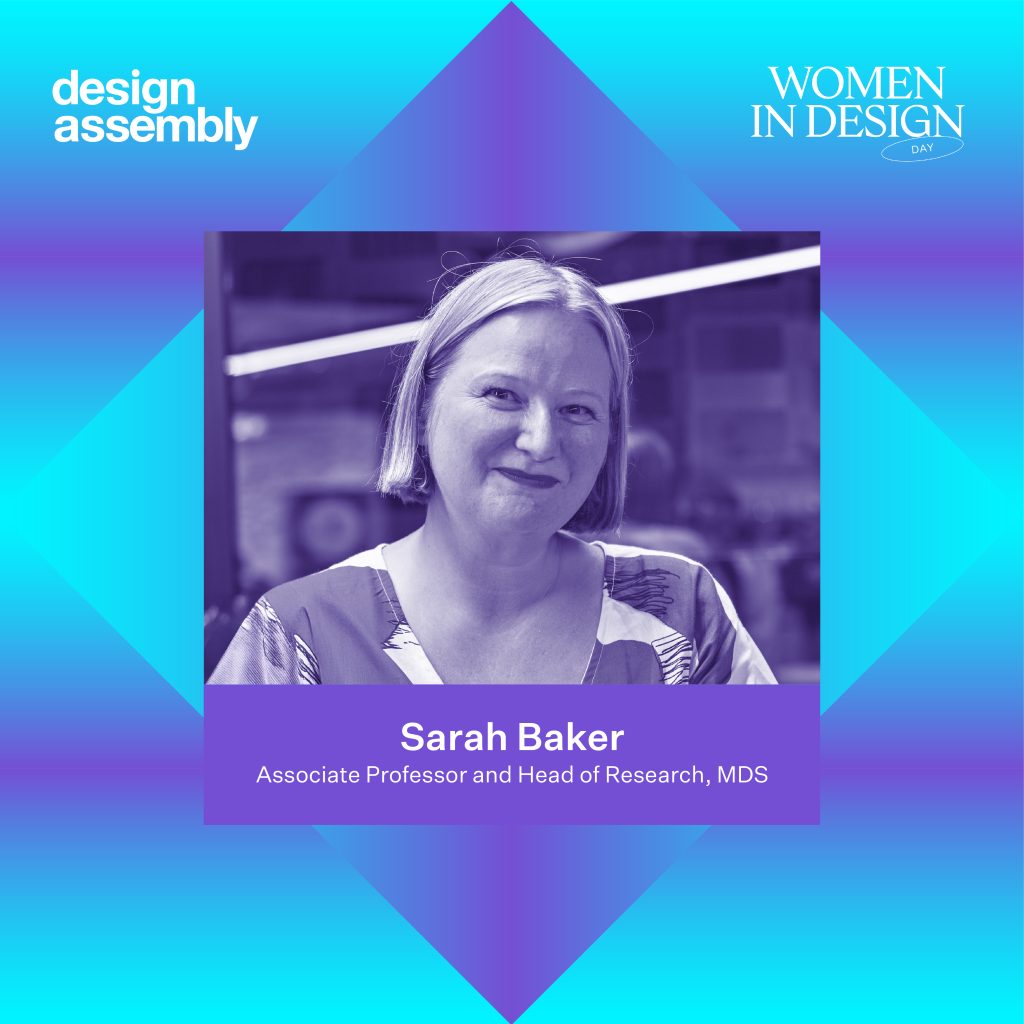
Dr Sarah Baker | Design Strategist, Researcher and Educator
Associate Professor, Dr Sarah Baker is a design strategist, researcher, and
educator at Media Design School in Auckland.
Sarah’s book ‘Designing Gender: A Feminist Toolkit’ was published by Bloomsbury in January 2024. She has extensive experience running workshops with designers, design students and community groups.
Visit Dr Baker’s webite to learn more about her mahi or contact her via email: sarah.baker@mediadesignschool.com.
Women in Design Day 2025— taking place on 21 March in Tāmaki Makaurau Auckland.
This is your opportunity to unplug and reconnect with your practice. An annual event dedicated to fostering community, celebration, and education among women in the design industry in Aotearoa New Zealand. Through out the day you’ll be able to enjoy hands-on activities, time in nature, and hear the inspiring stories from our speakers – enjoying shared experiences and validating experiences as women navigating a career in design.
The afternoon sessions offer a variety of workshops and activities for you to choose from. Dr Sarah Baker will be facilitating a Gender & Design workshop, exploring gender inequality in design and offering practical strategies for designers to make a change.
*Design Assembly Friends use your discount codes to access our discounted ticket options.